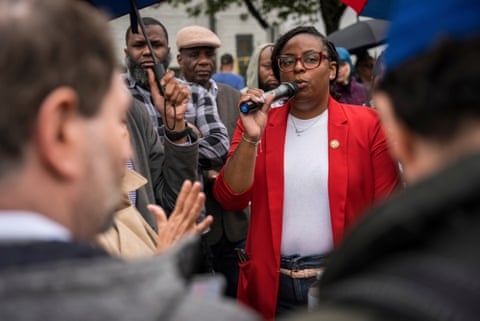
A freshman member of the U.S. House of Representatives is facing serious criminal charges stemming from what she describes as the lawful execution of her congressional duties. The case has ignited a debate over the separation of powers and the use of federal law enforcement against political opponents.
The congresswoman, a Democrat representing a district in New Jersey, was part of a delegation conducting an unannounced oversight visit at a federal immigration detention facility in her constituency last May. Such visits are a recognized congressional function. During the inspection, local authorities detained the mayor of Newark for trespassing, an incident that quickly escalated into a confrontation.
According to federal charging documents, the lawmaker allegedly interfered with the arrest. Video footage from the scene depicts a chaotic gathering involving agents, protesters, and elected officials. While an analysis of the footage confirmed contact between the congresswoman and federal personnel, the nature and intent of that contact remains unclear.
The mayor’s charges were promptly dropped. However, the Justice Department proceeded to indict the congresswoman on counts of assaulting, impeding, and interfering with a federal officer—charges that collectively carry a potential prison sentence of up to 17 years. The acting U.S. Attorney who brought the case has since left her position after a court found her appointment invalid.
In a statement, the accused lawmaker framed the prosecution as a politically motivated act of intimidation. She argued the administration is seeking to discourage robust congressional oversight, particularly of immigration enforcement agencies. She pointed to her role on the Homeland Security Committee and her advocacy for shutting down the facility in question, which later experienced a security breach involving escaped detainees.
“My job is to provide a check on power and to protect my constituents from overreach,” she said. “This prosecution is designed to instill fear and silence dissent.”
The White House has publicly criticized the congresswoman’s conduct during the incident, with the President stating that “the days of that behavior are over,” and emphasizing a commitment to “law and order.”
Legally, the congresswoman has pleaded not guilty and moved to have the charges dismissed, asserting she was acting within her official capacity and is a victim of selective prosecution. A judge has denied dismissal on two counts, finding insufficient evidence of prosecutorial animus, while a decision on a third charge is pending. No trial date has been scheduled.
The personal and professional toll has been significant. The congresswoman reports spending a substantial sum on legal defense, funded through donations due to ethics restrictions. The prospect of a lengthy prison sentence also brings personal strain, affecting her young family.
Some legal analysts have questioned the strength of the government’s case, suggesting the charges appear politically driven and represent a questionable use of prosecutorial discretion.
Despite the pressure, the lawmaker vows to continue her work. “The people elected me to be a voice and a shield,” she said. “Sometimes that duty requires personal sacrifice. I will not be intimidated from doing the job I was sent here to do.”