A major American toy manufacturer is challenging the legality of recent presidential tariffs in a high-stakes legal battle now before the nation’s highest court. The company argues the unilateral trade measures are unlawful and have imposed a severe financial burden, forcing difficult business decisions and threatening its operations.
The firm, a family-owned business with over a century of history, employs more than 500 people and produces thousands of educational toys and learning products. Senior executives state that tariff costs have skyrocketed, projecting a payment of approximately $14 million this year under the new duties, compared to $2 million in 2024. They warn that without a change, liabilities could grow even higher next year.
Faced with what they describe as an existential threat, the company chose litigation. “The risk of inaction was greater than the risk of a lawsuit,” a company executive explained. The case, now consolidated with others before the Supreme Court, contends that imposing such taxes falls within the constitutional power of Congress, not the executive branch.
The financial impact has been immediate and disruptive. Company leadership reports having to cut expenses, slow hiring, and scale back plans for new product launches due to unpredictable and fluctuating tariff rates. A significant portion of staff time is now diverted to managing supply chain crises instead of core business functions.
A specific product highlighted the chaos: a plush children’s toy originally made in China. Production was hastily moved to India to avoid steep tariffs, only for duties on Indian imports to then surge above the Chinese rate while the shipment was en route. The container arrived hours too late to qualify for a lower rate, costing the company an extra $50,000.
The company has explored shifting production to the United States but found it economically unfeasible. Quotes from domestic manufacturers reportedly came in 10 to 20 times higher than Asian costs, which would drastically increase retail prices and put products out of reach for most consumers. Instead, the firm is focusing on diversifying its supply chain across several countries.
While the legal challenge has drawn both support and criticism, company officials insist their motive is not political but a matter of legal principle and survival. “We wanted to take action because we didn’t believe what was done was legal,” the executive stated. “We wanted to stand up for our company and our employees.”
The Supreme Court heard arguments in the case late last year, and a ruling is anticipated soon. Observers noted that several justices, including conservatives, appeared skeptical of the administration’s legal position during hearings.
Regardless of the court’s decision, the company expects trade uncertainty to continue. “We expect that there will be tariffs after a decision… and so there will be continued uncertainty,” the executive said. “It does make it more difficult to make decisions.”
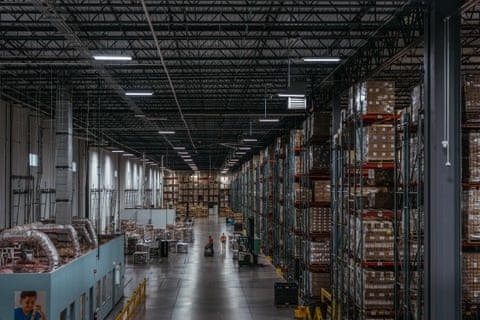
For now, operations continue at the company’s large suburban warehouse, where workers fill holiday orders. The outcome of the legal fight will have significant implications not only for the business’s future but also for the hundreds of families that depend on it.