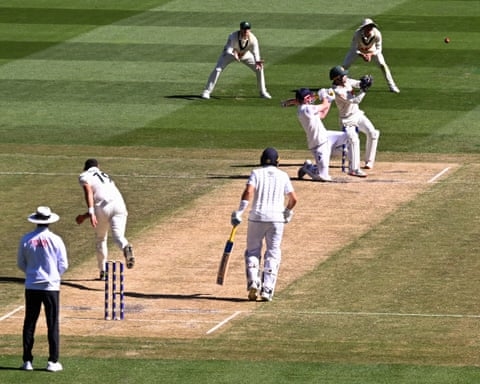
MELBOURNE — For a brief, chaotic stretch at the Melbourne Cricket Ground, conventional Test cricket dissolved. In its place came something faster, louder, and utterly disorienting—a blitz of bat swings, missed connections, and audacious strokeplay that felt less like a five-day contest and more like a fever dream.
Chasing a modest target of 175 on a pitch that offered relentless seam movement, England’s top order threw caution to the wind. Ben Duckett set the tone, swinging from the hip from the very first over, surviving close calls and embodying an approach that bordered on the reckless. Zak Crawley provided a moment of startling clarity, launching a six with imperious stillness. And when Brydon Carse strode out unusually high in the order, what followed was a frantic, almost surreal cameo.
It was, by any traditional measure, a kind of cricketing desecration. This ground, especially during the holiday period, is treated with reverence here—a secular cathedral for the longest form of the game. Yet, for two sessions, England treated it like a stage for unscripted, high-speed theatre.
Somehow, it worked. The scoreboard rattled along at over six runs an over. Wickets fell, but the target shrank rapidly. By the time the winning runs were hit, England had secured a four-wicket victory, their first Test win on Australian soil in 14 years.
The result itself is significant. Beating Australia at home, under any circumstances, remains a considerable feat. To do so a bowler light, skittling the hosts for 132 and then hunting down the runs with such aggression on a difficult surface, is an undeniable achievement. It provides tangible reward for a squad that has endured its share of collapses and criticism on this tour.
Yet, the triumph carries a bitter aftertaste—a lingering sense of opportunity lost. This win did not come as part of a sustained campaign for the Ashes, but in a dead rubber, with the series already decided. It served not as a vindication of the tour, but as a stark illustration of what could have been.
Australia fielded a depleted attack here, missing key bowlers. Their batting lineup has shown fragility. They were, by their lofty standards, vulnerable. England’s performance in Melbourne proved that this vulnerability could be exploited, that pressure could be applied with fearless batting.
The uncomfortable question now hangs in the Sydney air: where was this conviction in Perth, Adelaide, or Brisbane? A tour that began with jet-lagged uncertainty and tactical missteps has only found its most potent expression when the pressure was off. The aggressive philosophy, so thrilling in its purest form here, has at times looked like a set of slogans in search of a coherent plan.
This victory, therefore, is both a celebration and a reprimand. It is a testament to the talent and spirit within the squad, capable of moments of brilliant, disruptive cricket. But it also stands as a frustrating postscript to a campaign that might have been competitive, had the same clarity and aggression been harnessed from the start.
England showed in Melbourne that they can turn cricket into a dizzying, decisive spectacle. They finally did the thing they always said they could do. The regret will be that they only remembered how to do it once the series was already gone.