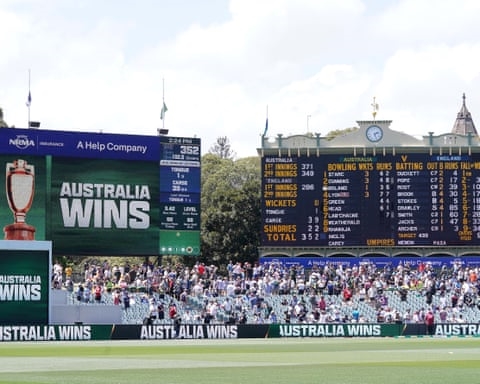
The England and Wales Cricket Board (ECB) will convene next month to examine another unsuccessful Ashes campaign in Australia. The discussions will be shaped by whether the touring side can salvage some pride or suffer a third series whitewash in recent history. However, the governing body’s capacity for meaningful intervention appears severely limited, having largely relinquished control over the sport’s fundamental structure and calendar.
Past reviews have yielded mixed results. An external inquiry led by Ken Schofield in 2007 led to significant appointments, like a director of cricket, and is credited with aiding England’s recovery to win in Australia four years later. A more recent high-performance review, chaired by former captain Andrew Strauss, proposed reducing the County Championship to better prepare players for Australian conditions, but these recommendations were rejected by the county clubs.
In a detailed public statement following the latest defeat, Strauss argued that systemic change, not just personnel changes, is essential. “We have been consistently outplayed because Australia benefits from a superior high-performance system,” he stated. “To alter this pattern, we must be willing to make the necessary structural adjustments.”
Such adjustments, however, seem improbable. The ECB’s authority has been diluted, with power ceded both upwards and downwards. A significant shift occurred with the recent £520 million sale of a majority stake in The Hundred franchises. This deal means the ECB will, for the first time since central contracts were introduced, lose control over player availability during that tournament next summer. A player involved in the final could miss crucial preparation for a Test series starting just days later—a level of franchise control not even seen in the Indian Premier League.
While the financial injection secures the future of many loss-making county clubs, it reinforces a status quo where the counties dictate the domestic schedule. The ECB and the Professional Cricketers’ Association have long advocated for a streamlined season closer to Australia’s Sheffield Shield model, but the responsibility for such decisions rests with the counties. A recent attempt to delegate reform to a county-led board failed when all proposed schedule changes were voted down, ensuring the Championship remains at 14 matches, largely confined to the season’s margins.
This dynamic leaves the ECB in a bind. Meaningful structural reform to break the cycle of failure in Australia appears off the agenda unless the board amends its own constitution to reclaim executive authority—a move that would require a vote among its 41 members. It achieved this when creating The Hundred, suggesting it possesses considerable leverage as the distributor of vast revenues.
The conclusion from the last major review now rings hollow: that deep structural reform, not just changing leadership, is needed to compete in Australia. For now, the ECB finds itself effectively restricted to doing just that, while the systemic issues underpinning England’s Ashes struggles remain entrenched.