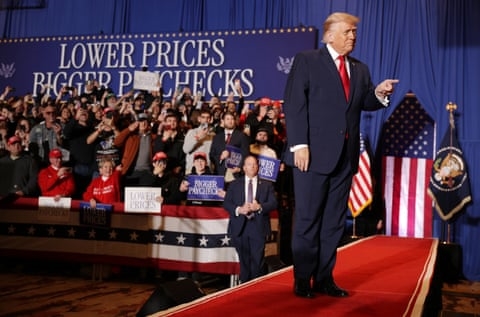
Nearly a year into a new presidential term, the American economy is not meeting the ambitious forecasts set at its outset. While the administration continues to project an imminent era of historic prosperity, current data on employment, manufacturing, and consumer prices paints a more subdued picture.
The labor market, which entered the year with steady momentum, has since lost significant steam. Official figures show monthly job creation has declined sharply compared to the previous year, with recent months posting notably weak gains. Consequently, the national unemployment rate has risen to its highest point in over four years.
A central pledge to revive domestic manufacturing and usher in a new industrial age has also yet to materialize in employment figures. The number of factory jobs has remained largely stagnant, increasing in only a minority of months since the administration began.
A primary policy tool deployed to stimulate this envisioned industrial shift has been a substantial increase in tariffs on imported goods, lifting the average rate to a multi-decade high. The implementation of these measures has been described as disjointed, marked by delays and policy reversals. Economists have consistently warned that such tariffs risk increasing costs for consumers, as businesses often pass the expense along.
On the inflation front, after a period of moderation, the pace of price increases has held steady for several months, contrary to claims of rapid decline. The administration has recently taken steps to alleviate economic pressure, including selectively rolling back some tariffs and proposing new support for agricultural sectors. Officials have also hinted at potential direct stimulus payments to households.
Administration advisors express strong confidence that major fiscal legislation will soon supercharge the economy, predicting a significant acceleration in growth by early next year. This optimism is centered on expectations of boosted household income and business investment.
However, independent economic analysts are far more cautious. Many project that the overall fiscal stimulus will be modest and that growth in the coming year is likely to mirror the current, more moderate pace. Some experts warn that the net effect of current policies, combined with other rising costs like healthcare, may leave many Americans, particularly those with lower incomes, in a worse financial position.
Despite the gap between rhetoric and current economic indicators, the administration’s message remains one of unwavering confidence, assuring the public that an unparalleled boom is on the horizon. For now, that promised transformation remains a matter of prediction rather than measurable reality.