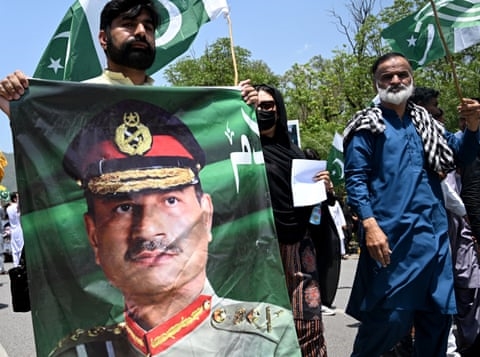
A recent change to the nation’s foundational law has fundamentally altered the balance of power, centralizing unprecedented authority within the military’s top command. The legislative revision, passed swiftly by parliament, extends the tenure and legal protections of the army’s senior officer while placing the entire armed forces under his direct oversight.
The move has drawn sharp criticism from opposition figures and analysts, who describe it as a severe erosion of democratic norms and judicial independence. They argue it effectively institutionalizes military supremacy over civilian institutions. A newly established constitutional court, with judges selected by the government, will replace the existing supreme court, a change that has prompted several senior judges to resign in protest.
The beneficiary of this amendment is the current army chief, whose influence was already considerable. His term has been reset and can be extended, potentially keeping him in his role for a decade or more. He has also been granted permanent immunity from criminal prosecution. Supporters of the amendment cite national security achievements, including recent border tensions with a neighboring country, as justification for consolidating command and bestowing these honors.
The legislative process itself raised eyebrows. Unlike typical amendments, which undergo lengthy debate, this measure passed both houses of parliament in a matter of hours with a large majority. Observers note this speed underscores the current political climate, where the civilian ruling coalition is widely perceived as fragile and reliant on military backing for its survival.
International human rights voices have expressed concern, warning that the changes could have deep consequences for democratic governance and the rule of law. Within military circles, some retired officers have anonymously voiced unease about concentrating control over all service branches—and by extension, the strategic weapons arsenal—under a single individual, suggesting it could create institutional friction.
Defense officials have dismissed such concerns, stating that the armed forces are a pillar of the state and deserve recognition for their service. They maintain that descriptions of over-concentrated power are speculative.
Historians point out that while this amendment formalizes a longstanding dynamic of significant military influence in political affairs, its long-term implications are significant. Reversing such entrenched powers in the future would be a formidable challenge. However, analysts also note that the leadership now faces the substantial test of addressing persistent domestic security threats and a severe economic crisis, pressures that have historically complicated prolonged military-led governance.