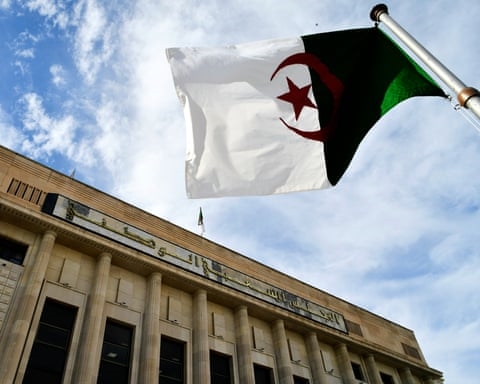
Algeria’s national legislature has passed a landmark bill formally classifying the period of French colonial rule as a criminal enterprise. The law demands both an official apology and financial reparations from France.
In a unanimous vote, members of parliament approved the legislation, which asserts France’s legal accountability for its historical actions in the North African nation. The session was marked by displays of national pride, with lawmakers draped in the country’s flag.
The move comes amid heightened diplomatic tensions between the two nations. Observers note that while the law’s direct legal force may be limited, its political symbolism is potent, representing a firm stance on historical memory.
The text of the law catalogues a series of alleged colonial crimes, including acts of mass violence, torture, the plundering of natural resources, and the conduct of nuclear tests on Algerian soil. It frames compensation for material and moral damages as an irrevocable right of the Algerian state and its people.
French administration of Algeria lasted from 1830 until independence in 1962, a 132-year period historians characterize by widespread violence and displacement, culminating in a brutal war. Algerian officials estimate the conflict’s death toll at 1.5 million, a figure higher than those cited by some French academics.
While French President Emmanuel Macron has previously described colonization as a “crime against humanity,” his government has not issued a formal apology. Recent inquiries to the French foreign ministry regarding the Algerian law were met with a standard policy of not commenting on internal political matters in other states.
Analysts specializing in colonial history suggest the legislation’s primary impact is diplomatic and symbolic. It is seen as a definitive statement intended to reset the terms of historical discourse between the two countries, underscoring Algeria’s position that this chapter of its past is non-negotiable.