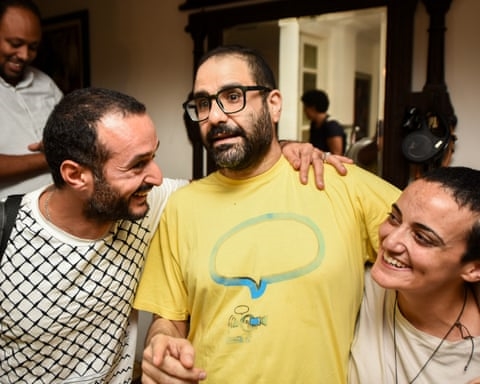
British-Egyptian activist Alaa Abd el-Fattah has issued a public apology for inflammatory social media posts he wrote over a decade ago. The statements, which recently resurfaced, have sparked political controversy and calls for his British citizenship to be revoked.
In a lengthy statement released early Monday, the recently freed campaigner expressed regret for the language used in posts dating back to 2010-2012. He described the tweets as the product of a “young man’s anger and frustrations” during a period of regional conflict and political upheaval in Egypt.
“I do understand how shocking and hurtful they are, and for that I unequivocally apologise,” he wrote, acknowledging that some comments were made with “total disregard for how they read to other people.”
The posts in question include violent rhetoric against Zionists and derogatory remarks about British people. Their circulation has led to criticism from across the political spectrum, with some figures questioning the government’s support for his case and others reporting him to counter-terrorism authorities.
Abd el-Fattah defended his broader record, stating the tweets misrepresent a life dedicated to non-violent activism. He emphasized his documented work advocating for democracy, minority rights, and free speech in Egypt—efforts for which he served multiple prison sentences.
“Today, this middle-aged father firmly believes all our fates are entwined,” he stated, contrasting his past online persona with his current views. He also claimed some posts have been “completely misunderstood” or taken out of context, including one allegedly mocking homophobia and another criticizing Holocaust denial.
The activist received British citizenship in 2021 through his mother, who was born in London. His release from an Egyptian prison last year followed a prolonged international campaign for his freedom.
Concluding his apology, Abd el-Fattah asked the public to judge him by his actions rather than his past social media activity, writing that he has “paid a steep price” for his human rights advocacy.