Across Southeast Asia, communities are grappling with the aftermath of devastating floods that have claimed over a thousand lives. Survivors from Indonesia to Thailand are sharing stories of narrow escapes and profound loss after torrential rains and cyclones triggered unprecedented flooding.
In Indonesia’s Aceh province, the initial downpour seemed like a typical monsoon event. But for residents like 63-year-old Aminah Ali, the situation escalated terrifyingly. A sudden surge of water inundated her village, forcing her to seek refuge on her rooftop for an entire day. From that vantage point, she watched helplessly as neighboring homes were swept away. “Everything is gone,” she recounted, describing a home now filled with mud and the loss of all her possessions.
The scale of the disaster is staggering, with Indonesia’s Sumatra island suffering particularly severe losses. The force of the water was immense. Busra Ishak, 60, saw his home vanish completely. “The current was unimaginably powerful,” he said, noting debris in the water so massive that “it could kill an elephant.” He survived by clinging to a coconut tree for over twelve hours, a ordeal during which he lost a family member.
In Southern Thailand, the city of Hat Yai was among the hardest-hit areas. Natchanun Insuwano found himself trapped with his parents in their flooded home. Stranded for days with minimal supplies, he desperately signaled for help. “We were cold, hungry, and saw no rescue,” he said. Criticism has mounted against local authorities for what survivors describe as inadequate warnings, with evacuation orders coming too late for many.
The floodwaters brought unique dangers. Chutikan Panpit, 32, was bitten by a venomous snake while checking the water level on her terrace. Trapped for 32 hours without access to medical care, she endured severe pain, sustained only by thoughts of her one-year-old son. Rescuers later had to battle fierce currents to evacuate her.
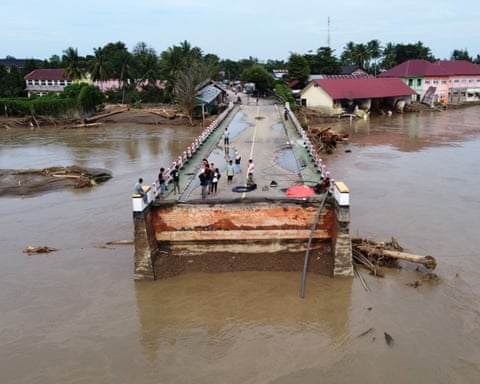
Although waters have receded in some areas, the path to recovery is daunting. Streets are littered with mud-caked debris and ruined belongings. Critical infrastructure, including bridges and highways, has been severed, isolating communities. Many displaced residents now rely on shelters and community donations for basic necessities.
For those returning, the task is to salvage what remains. Survivors describe a disaster of historic proportions, one that has left deep psychological scars. The sound of rain alone is now enough to evoke fear, a stark reminder of the catastrophe that has upended countless lives across the region.