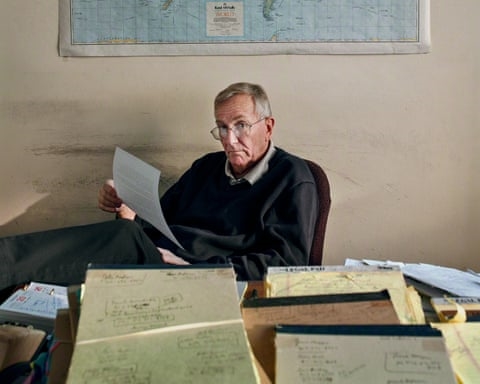
The new documentary “Cover-Up” offers a compelling look into the life and methods of Seymour Hersh, a journalist whose career has been defined by exposing truths that powerful institutions sought to bury. While his contemporaries became household names through cinematic portrayals, Hersh’s legacy is built on a longer, more relentless series of investigations, from the horrors of My Lai to the abuses at Abu Ghraib.
The film’s title reflects its central theme: Hersh’s lifelong mission to uncover what others want hidden. Yet it also hints at the inherent tension in his work—the necessity of protecting his own sources, of maintaining a veil of secrecy even as he seeks to dismantle it. This duality becomes palpable during the documentary’s production, as Hersh grows visibly anxious over the potential exposure of confidential information, nearly withdrawing his cooperation entirely.
Hersh’s approach is depicted as methodical and old-school. He operates on the principle that official denials are a standard first response, often followed by attempts to isolate an incident as an anomaly. His reporting, however, consistently suggests these are not isolated “bad apples,” but symptoms of deeper, systemic issues. His technique relies on persistence, direct contact with those involved, and a refusal to accept evasion—a testament to traditional investigative rigor.
The portrait that emerges is of a fiercely independent and combative figure. While the film only briefly touches on his formidable temper, it underscores his disdain for journalistic complacency. Hersh expresses candid regret over missed opportunities, like aspects of the Watergate story, and reflects on the pitfalls of being misled by forgeries. He is particularly scathing toward media outlets he views as uncritical conduits for official narratives, though he acknowledges the complex realities of working within major news organizations.
Ultimately, “Cover-Up” presents Hersh as the quintessential freelancer—a nonconformist operating on his own terms, now even via independent platforms. In an age where the evidential power of photography is being challenged by new technology, the documentary argues that Hersh’s brand of dogged, skeptical inquiry remains as vital as ever. The film is a study not just of the man, but of the unwavering investigative instinct itself.