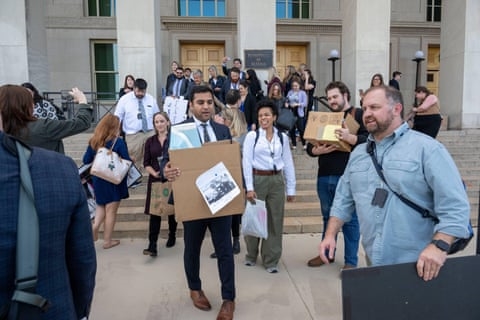
The briefing room at the Pentagon, once the domain of seasoned correspondents from the nation’s most established news organizations, now presents a markedly different scene. The shift follows a contentious new accreditation policy that has led to a wholesale change in who is granted access to report on the Department of Defense.
Last fall, nearly all major traditional news outlets relinquished their Pentagon press credentials. The reason was a 21-page agreement imposed by the department, which mandated that journalists pledge not to seek or publish unauthorized information and accept restrictions on movement within the building. Major publications, including The New York Times—which has since filed a lawsuit over the policy—viewed the terms as an unacceptable constraint on independent reporting.
In the vacuum created by this departure, the Pentagon has issued credentials to a new cohort of media figures and outlets. This group is predominantly composed of conservative commentators, activists, and digital platforms. Among those now holding press passes are prominent supporters of the former administration, the media arm of a well-known pillow company executive, and hosts from partisan broadcast networks.
This transformation occurs at a moment of significant scrutiny for the Defense Department. Recent weeks have seen an inspector general’s report criticize the Secretary of Defense for a security lapse involving sensitive operational details, reigniting calls for accountability. Simultaneously, questions persist about military actions in the Caribbean.
Critics argue the newly configured press corps is ill-suited to conduct such rigorous oversight. Many of the newly accredited individuals and organizations are openly aligned with the current political administration, leading to concerns about a lack of independent scrutiny.
“The core function of the press requires independence from the government it covers,” said a First Amendment legal expert. “Policies that dictate how journalists can do their job, or that appear to favor certain viewpoints in granting access, strike at a fundamental principle.”
In response to the criticism, Pentagon leadership has defended the change. Officials released a statement characterizing the new press corps—comprising over seventy independent journalists, bloggers, and social media influencers—as “new media” better positioned to communicate with a wide segment of the public.
“We want to make sure that we’re reaching as many Americans as possible,” the Pentagon’s press secretary stated.
The situation underscores a deepening debate over press access and government transparency. Journalism advocates warn that replacing traditional, investigative reporting with a system reliant on officially sanctioned information risks leaving the public uninformed about the workings of one of the government’s most powerful and secretive institutions. The ongoing legal challenge will test the boundaries of the Pentagon’s authority to set the terms for those who report on its activities.