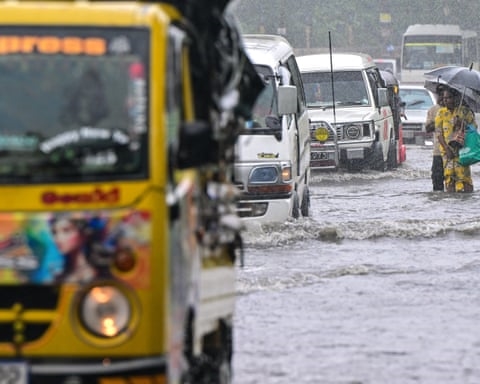
The true force of the weather became clear only when it refused to stop. For residents in Sri Lanka’s central highlands, initial monsoon rains offered little cause for alarm. But the relentless downpour that followed marked the arrival of Cyclone Ditwah, an event now being described as one of the most catastrophic in the island’s modern history.
In the Badulla district, what began as a heavy shower escalated into a life-altering disaster. One family, attempting to secure valuables as others evacuated, found their home directly in the path of a landslide. A frantic escape through a shattered window was their only salvation, leaving everything they owned buried under tonnes of mud and rock. “Our home was swallowed by the earth,” one survivor recounted, her voice heavy with shock after days of digging yielded only a few salvaged items. “Starting over from nothing is a burden almost harder to bear.”
The official death toll has climbed past 400, with dozens still unaccounted for. The scale of destruction is vast, submerging villages, homes, and parts of the capital, Colombo. Aerial missions are delivering essential supplies to cut-off communities, while the national military has been mobilised to support overwhelmed local emergency teams. Preliminary estimates indicate over a million people have been affected.
For a country still grappling with the profound economic crisis of recent years, the timing of this disaster could not be more severe. The blow to vital industries, including tourism, threatens to compound existing financial struggles. Infrastructure, already strained, has been critically damaged.
In temporary shelters, the human cost is starkly visible. Schools have been converted into havens for the displaced, where hundreds of families share minimal facilities. “They have been here for days, surviving on dry rations we prepare together,” explained a local teacher coordinating aid. “Their homes are cracked and unstable. They have nowhere safe to return to.”
Many survivors report receiving no official warning before floodwaters surged. In Ratnapura, a southern city among the hardest hit, families watched in dread as the Kalu river breached its banks. With no evacuation order, they made their own desperate decisions as dawn broke. One woman described a two-day ordeal trapped on a rooftop, surrounded by floodwaters with no food or drinking water. “I have never known fear like that,” she said.
Returning to their homes as the waters receded revealed a new layer of devastation: interiors coated in thick sludge, every possession ruined. “We found nothing as it was,” another survivor stated, surveying the damage. “The road ahead is incredibly difficult, but we are alive. That is what matters now.”
With more rainfall predicted and many areas still inaccessible to rescue crews, authorities warn the situation may yet worsen. The nation now faces the monumental task of rebuilding, a challenge that will test its resilience for years to come.