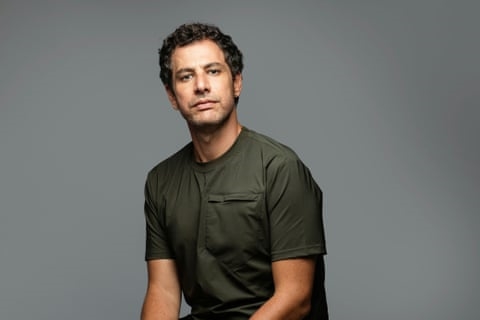
A new memoir traces a deeply personal journey through identity, belonging, and the weight of inherited history. The author, Tareq Baconi, intertwines the story of his first love with his family’s multi-generational narrative of exile—from Haifa, to Beirut, then Amman—before his own move to London.
At the heart of the book is a love story between two boys, set against a backdrop of political silence and repression. Growing up in Jordan as a Palestinian refugee, Baconi describes an environment where safety was contingent on political quietism. His mother, a former political activist, had exchanged her firebrand ideals for the subdued domesticity demanded by exile. “To live, we had to be silent,” Baconi writes, capturing the unspoken pact of their refuge.
Baconi’s early sense of difference was twofold. He felt estranged from the patriarchal norms of his community and grappled with his queer identity in a homophobic society. Salvation came in the form of a deep friendship with a boy named Ramzi, a bond closer than brotherhood. That friendship shattered when Baconi confessed his love, prompting his departure for London.
Life in the West initially seemed to offer an escape—a promise of liberal freedom where he could leave behind a community that rejected his sexuality. However, the 2003 U.S.-led invasion of Iraq ignited a long-dormant political consciousness. On a flight filled with journalists heading to cover the war, a conversation forced a stark realization: he could not shed his Palestinian identity any more than he could change his sexuality.
This awakening sent him on a dual path of discovery. Professionally, he became a scholar and political analyst, ultimately authoring a noted work on Hamas. Personally, he traveled the region, uncovering vibrant, semi-hidden queer subcultrees and confronting the historical amnesia that had marked his youth. He began to academically reclaim the history that contextualized his family’s scattered stories of massacres and stolen homes.
The memoir is notable for its unflinching honesty, particularly regarding his family. Baconi recounts his father’s devastating initial reaction to his coming out—a wish to have died without knowing—and his mother’s attempt to medicate her husband preemptively. Yet, the narrative is ultimately one of reconciliation, detailing how love prevailed, transforming his father into a devoted father-in-law.
Baconi’s work also serves as a pointed rebuttal to narratives that portray Palestinian society as monolithically homophobic while presenting Israel as a regional LGBTQ+ haven—a practice critics label “pinkwashing.” He argues such framing erases indigenous queer Palestinian existence and activism, casting queer Palestinians as foreign implants rather than rightful members of their own society.
While largely completed before the recent war in Gaza, the book provides essential historical context, chronicling decades of displacement and loss. Yet, despite its engagement with tragedy, it is fundamentally a story of love: familial love, love for a homeland, and love for a community. It is a call for a future where no one must hide or abandon a part of themselves to simply live.
The memoir stands as a courageous act of testimony, breaking the very silences it describes. As Baconi himself reflects, publishing such a work now, during a period of profound crisis, feels fraught. “On the one hand, life is continuing,” he notes, “and on the other hand, it shouldn’t be.” His book insists on the necessity of continuing, and of telling the full, complicated truth of one’s life.