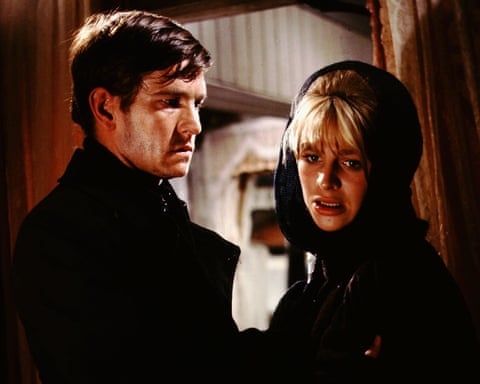
Six decades after its release, David Lean’s sprawling adaptation of Doctor Zhivago stands as a monumental artifact of classic Hollywood filmmaking. Its three-hour-plus runtime, epic scale, and sweeping romanticism feel distinctly of another era, yet the film retains a potent, almost magical, hold.
The story, drawn from Boris Pasternak’s once-controversial novel, unfolds against the brutal upheaval of early 20th-century Russia. It follows the life of Yuri Zhivago, a physician and poet, whose world is shattered by war and revolution. At its heart, however, is a timeless love story. Zhivago’s profound, yet doomed, connection with Lara Antipova forms the emotional core, a private passion that persists amidst public chaos. Their romance, kindled and tested by forces far beyond their control, becomes a powerful symbol of individual feeling surviving historical catastrophe.
While some contemporary critiques dismissed the film as an opulent, politically disengaged melodrama, its focus is precisely on the human cost of those seismic events. Lean’s mastery is not in delivering a granular history lesson, but in conveying the experience of ordinary lives—love, family, art—being swept up in an unstoppable tide. The film’s most compelling scenes often juxtapose vast historical forces with intimate moments, suggesting that in tumultuous times, personal connections carry the weight of rebellion.
Technically, the production remains a staggering achievement. From the haunting score to the vast, icy landscapes that have become iconic, the film creates a fully immersive world. The famous chill of its Russian winters makes the warmth of its central romance all the more vivid, a contrast that has cemented its status as a definitive viewing experience for generations.
The passage of time has only clarified the film’s central theme: the endurance of art and human connection. Zhivago’s poetry, inspired by Lara, outlives the political doctrines that sought to render it obsolete. Similarly, the film itself, though a relic of a bygone studio system, continues to resonate because it speaks to a fundamental truth. It argues that even when history declares “the personal life is dead,” the human heart—and the stories it inspires—proves remarkably resilient. Doctor Zhivago endures not merely as a spectacle, but as a testament to that enduring spirit.