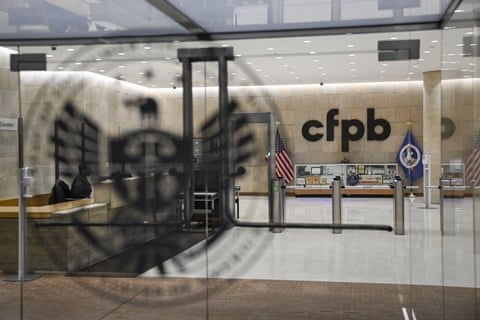
The Biden administration is mounting a fresh and aggressive legal challenge to the Consumer Financial Protection Bureau (CFPB), seeking to cut off the agency’s primary funding source. In a recent court filing, government attorneys argued that the CFPB’s established funding mechanism is no longer lawful, a move that could effectively paralyze the agency.
According to the filing, the CFPB is projected to deplete its current financial reserves by early 2026. The administration contends that the agency is now legally prohibited from accessing its customary funding stream from the Federal Reserve. This argument hinges on a technical interpretation of the Federal Reserve’s “combined earnings,” which the administration claims refers to profits—a condition the Fed has not met since 2022.
This represents the latest chapter in a prolonged effort to curtail the agency’s operations. Previous attempts to dismiss a significant portion of its workforce have been tied up in litigation for months. The CFPB, established in the aftermath of the 2008 financial crisis, has been credited with recovering over $21 billion for American consumers through its enforcement actions.
The administration’s position has been met with sharp criticism and legal setbacks. Multiple federal judges have previously rejected similar arguments when used by corporations fighting CFPB lawsuits. Furthermore, a federal court order currently prohibits the mass dismissal of agency staff, a plan which had been openly discussed by administration officials.
In a letter to the White House, Democratic lawmakers on the Senate Banking Committee condemned the ongoing efforts, calling them “illegal” and warning that American families would bear the financial consequences. They highlighted the contradiction between the administration’s latest legal strategy and existing court rulings that have blocked the agency’s shutdown.
While the full D.C. Circuit Court of Appeals considers the broader case, the agency’s operational capacity has already been severely limited, with a majority of its work suspended. The CFPB declined to comment on the recent court filing.