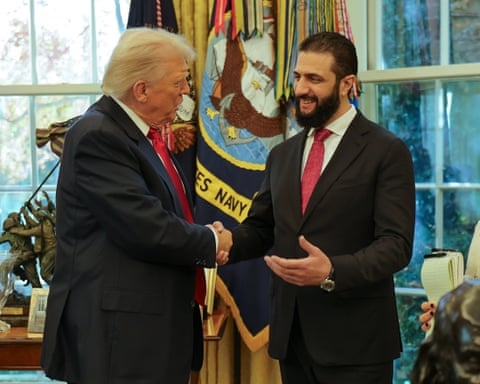
In a significant diplomatic shift, the United States has moved to temporarily lift a portion of its stringent economic sanctions against Syria. This decision follows a landmark meeting in Washington between the American president and Syria’s new head of state, marking the first such high-level encounter between the two nations in nearly eight decades.
The Syrian leader, a former opposition commander once pursued by U.S. authorities, met with his American counterpart at the White House. In public remarks, the U.S. president praised his guest as a resilient figure from a challenging background, expressing a personal rapport and a commitment to fostering success in Syria as a cornerstone for regional stability.
Subsequent to the discussions, the U.S. State Department disclosed a six-month suspension of select sanctions, primarily those impacting Syria’s energy sector under legislation originally designed to pressure the former regime. The relief is intended to facilitate reconstruction efforts, though specific restrictions involving transactions with Russian and Iranian entities will remain firmly in place. An official statement framed the move as fulfilling a pledge to offer Syria an opportunity for recovery and growth, while maintaining measures against malign actors.
The Syrian official’s background includes leadership of a faction formerly aligned with extremist networks and designated as a terrorist organization by Washington. That designation was revoked following the group’s pivotal role in the conflict that ended the previous Syrian government’s rule.
While the talks did not yield an immediate announcement on Syria formally joining the U.S.-led coalition against extremist militant groups or on re-establishing a Syrian diplomatic mission in Washington, both sides indicated progress. The Syrian leader described reaching a “political” agreement, and the U.S. president suggested further announcements concerning Syria’s role are anticipated. Separately, Damascus announced an accord with Washington to incorporate Kurdish-led forces into the national army structure.
This development signals a profound recalibration of a long-antagonistic relationship, moving from confrontation toward a tentative and conditional engagement focused on postwar stabilization.