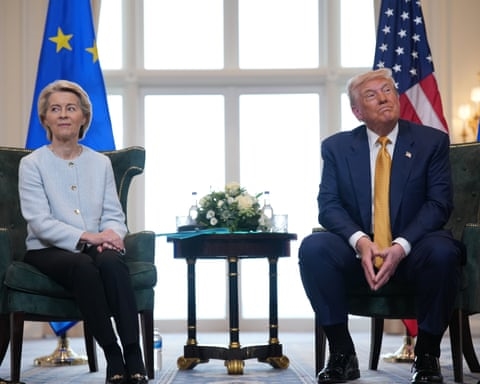
High-level discussions between the United States and the European Union are scheduled to resume next week, following a two-month hiatus. The talks aim to address several unresolved issues stemming from a tariff agreement reached last summer, which has faced significant implementation delays.
The US delegation, led by Commerce Secretary Howard Lutnick and Trade Representative Jamieson Greer, will meet with EU commissioners, national ministers, and industry leaders in Brussels. These will be the first direct negotiations since a prolonged US government shutdown in October. The agenda includes a working lunch with trade ministers from all 27 EU member states, a move described by sources as aimed at maintaining a unified front and preventing a fragmented approach from individual countries.
The core agreement, negotiated in July, established a baseline 15% tariff on most EU goods entering the US, averting a threatened 50% levy. However, the pact is not legally binding and requires parliamentary ratification in the EU, a process that may not conclude before February. American officials have expressed growing frustration with what they perceive as a slow pace of execution from the European side.
Key points of contention expected to dominate the dialogue include the ongoing 50% US tariffs on European steel and aluminum, as well as additional duties applied to a wide range of products containing steel components. Several EU nations, particularly wine and spirits producers like France and Ireland, are pushing for the removal of the 15% levy on their exports.
Separately, the two sides will discuss the global semiconductor supply chain and strategies to shield their domestic steel industries from what they view as unfairly priced Chinese imports. The EU recently proposed anti-dumping measures mirroring the US tariff approach, hoping it will lead Washington to reduce the steep metals duties.
A major point of friction involves so-called “derivative” tariffs. Last fall, the US identified hundreds of products—from bicycles to tin cans—that contain steel and are subject to separate charges. European businesses have labeled these “hidden tariffs,” reporting logistical nightmares and customs penalties as high as 200% for companies struggling with complex new paperwork requirements to trace all steel components to their origin. EU negotiators have stated that removing these derivative tariffs is a top priority, arguing they violate the fundamental spirit of the July understanding.
The talks will also feature a roundtable with major industry executives, including leadership from Volkswagen and TotalEnergies, highlighting the high economic stakes for the private sector on both sides of the Atlantic.