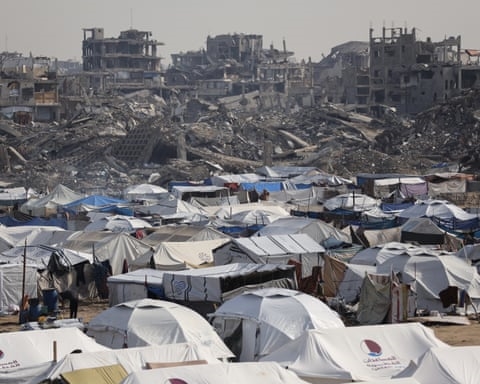
The United Nations Security Council is set for a critical vote on Monday concerning a proposal to deploy an international stabilization force to the Gaza Strip. The draft resolution, presented by the United States, has been the focus of intense diplomatic negotiations, particularly after the inclusion of language referencing a future Palestinian state—a late addition pressed by Arab nations.
This American-backed plan outlines a two-year mandate for a multinational force. Its stated objectives would include securing border regions, protecting civilians, safeguarding humanitarian aid delivery, and overseeing the disarmament of non-state armed groups within the territory. The initiative is derived from a broader framework that also calls for Gaza’s reconstruction and governance by a Palestinian administration, ultimately overseen by a U.S.-led oversight body.
A competing resolution has been submitted by Russia and China, creating a scenario where both proposals risk being blocked by vetoes from permanent council members.
The inclusion of a pathway to Palestinian statehood in the U.S. draft, described as a potential outcome following necessary reforms and reconstruction, has sparked significant political tension in Israel. Prime Minister Benjamin Netanyahu, facing pressure from far-right coalition partners who vehemently oppose any move toward Palestinian sovereignty, addressed the clause in cabinet discussions. He asserted Israel’s longstanding opposition to a Palestinian state remains unchanged but suggested the reference was a diplomatic necessity to facilitate the formation of the international force.
Key regional powers, including several Arab and Muslim-majority nations, have expressed conditional support for the stabilization force proposal. However, disagreements persist over the force’s chain of command, with some nations insisting it answer to the UN rather than a U.S.-chaired body. Furthermore, potential troop-contributing countries have raised concerns, and Israel has objected to the participation of certain nations.
The proposed force’s most politically sensitive task would be overseeing the disarmament of Hamas, a precondition linked to any future Israeli military withdrawal from Gaza. Analysts note the immense practical challenge of this mandate, leading to speculation that the disarmament requirement could be subject to future compromise.
The upcoming Security Council vote underscores the complex international effort to address Gaza’s future, balancing immediate stabilization needs with the deeply divisive long-term political question of Palestinian statehood.