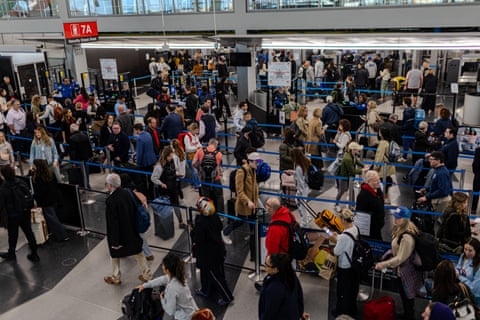
A significant reduction in commercial flights across the United States is now underway, creating widespread disruptions for travelers. The cuts come as federal officials move to scale back operations, citing safety concerns within the nation’s air traffic control system during an ongoing lapse in government funding.
With air traffic controllers continuing to work without pay due to the political stalemate, aviation authorities have mandated reduced schedules at dozens of major airports. The directive aims to maintain safety margins by lowering the volume of air traffic. The impact is being felt both domestically and internationally, as hubs like New York and Los Angeles implement schedule changes that ripple across global networks.
Hundreds of flights linked to the U.S. have been canceled, with data indicating these make up the majority of global cancellations. Transportation officials have identified approximately forty high-traffic airports where operations must be curtailed, with initial reductions set to deepen in the coming days. Industry analysts estimate the cuts could ultimately affect nearly two thousand flights and over a quarter of a million passenger seats.
Major carriers, including United, Delta, and Southwest, have begun adjusting their schedules, with some offering customers advance notice and options to rebook or receive refunds. Airlines report that while they intend to operate the majority of their planned flights, rolling adjustments are expected as the situation develops.
The timing intensifies pressure on Washington, with the critical Thanksgiving travel period just weeks away. The disruption highlights longstanding challenges within the aviation system, including staffing shortages and reliance on aging technology. Analysts note that the political deadlock has exacerbated these structural issues, turning air travel into a point of public leverage.
The current funding impasse has now become the longest on record. While essential personnel remain on duty, thousands of air traffic controllers are doing so without compensation. Aviation leaders have described the situation as unprecedented, forcing measures not seen in decades of managing the national airspace.
As travelers nationwide scramble to adjust their plans, calls are mounting for a swift resolution in Congress to restore normal operations and end the travel chaos.