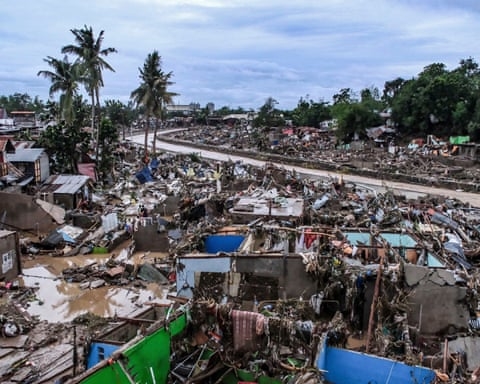
The death toll from Typhoon Kalmaegi has climbed to 66, with 26 individuals still missing, following catastrophic flooding across the central Philippines. The storm unleashed torrential rains and powerful winds, submerging communities and stranding residents on rooftops as they awaited rescue.
Among the fatalities were six military personnel killed in a helicopter crash in Agusan del Sur province. The aircraft was on a humanitarian mission to assist areas impacted by the typhoon when it went down. The cause of the crash remains under investigation.
The storm, which carried sustained winds of up to 130 kilometers per hour, made landfall on Tuesday before moving westward over the South China Sea. The province of Cebu bore the brunt of the disaster, accounting for a significant number of casualties. Rapidly rising waters from swollen rivers triggered flash floods that inundated residential areas, trapping people in their homes.
Emergency services reported receiving numerous distress calls from individuals stranded on their roofs. Rescue operations were hampered by dangerous flood conditions, with teams forced to wait for waters to recede to ensure the safety of responders.
Cebu, a densely populated region still recovering from a major earthquake in late September, has declared a state of calamity. This measure enables the swift release of emergency funds for disaster response and recovery. Prior to the typhoon’s arrival, hundreds of families displaced by the earlier quake were relocated from temporary tents to more secure evacuation centers.
Additional deaths were reported in Southern Leyte and Bohol provinces, where one resident drowned in floodwaters and another was struck by a fallen tree.
In preparation for the storm, authorities evacuated over 387,000 people from vulnerable areas across the eastern and central islands. Warnings were issued for life-threatening storm surges, heavy rainfall, and destructive winds. The severe weather also disrupted travel, grounding at least 186 domestic flights and stranding thousands of passengers at seaports after coast guard officials suspended sea travel.
The Philippines faces an average of twenty typhoons annually, alongside frequent seismic activity and volcanic eruptions, positioning it among the world’s most disaster-vulnerable nations.