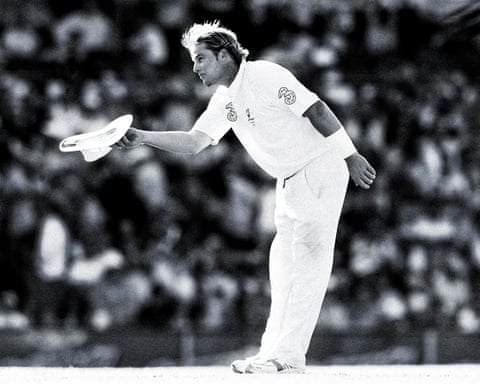
When the history of the Ashes is written, one name stands apart. It belongs to the man who didn’t just play the game but defined it for a generation: Shane Warne.
The statistics alone are staggering. With 195 wickets, he remains the most prolific bowler in Ashes history, claiming a record 11 five-wicket hauls. He was a central figure in seven victorious series for Australia, and even in the sole defeat, his performance was a masterclass. For over a decade, he was the dominant, magnetic force in cricket’s oldest rivalry.
Yet the numbers only tell half the story. His true impact was in his aura—the theatrical presence that transformed every spell into an event. From his Ashes debut at Old Trafford, where he announced himself with a predatory confidence, to his final, weathered campaigns, Warne commanded attention. His bowling was a complex art of dip, spin, and intelligence, but it was delivered with a showman’s flair that made every spectator feel part of the spectacle.
Debates about the greatest Ashes cricketer will always include legends like Don Bradman, whose batting records are untouchable, or the relentless Glenn McGrath. But Warne’s case is built on something more intangible: influence. He was a strategist on the field, an undercover captain who shaped moments and lifted his teammates. He made the famously difficult art of leg-spin accessible and thrilling, connecting with fans in a way few athletes ever manage.
His legacy is also one of remarkable relatability. Despite his superstar status, he retained the demeanor of a shrewd club cricketer—reading batsmen, trusting his instincts, and remembering what worked. In an era now dominated by data, his genius was a reminder of cricket’s human element: intuition, memory, and sheer competitive will.
Off the field, his life was lived in the headlines, yet it never diminished the universal respect he commanded from peers and rivals alike. In both Australia and England, he was uniquely beloved, a testament to the charisma and authenticity he brought to the sport.
Today, the Ashes feels different without him. The memory, however, remains vivid: the rhythmic approach, the rolling shoulders, the ball fizzing toward the batsman. It is the memory of a competitor who bent the biggest occasions to his will and, in doing so, became inseparable from the contest itself. In the long history of England versus Australia, Shane Warne wasn’t just a player; he was the embodiment of the Ashes spirit.