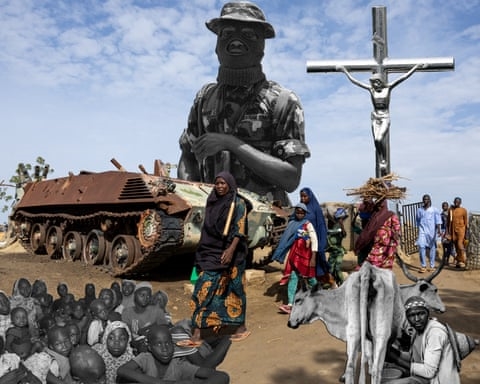
Nigeria’s security landscape is a complex web where political marginalization, economic desperation, and sectarian tensions intertwine, creating a crisis that defies simple explanation. The recent mass abduction of schoolchildren is not an isolated event, but a symptom of a deeper, systemic failure.
At the heart of the turmoil is the plight of minority communities. Across the country’s volatile Middle Belt and beyond, ethnic and religious minorities feel systematically sidelined. The competition for dwindling resources—land, water, political power—often erupts into violence, with narratives of religious persecution emerging from a broader struggle for survival and recognition.
Longstanding conflicts, such as the clashes between nomadic herders and settled farmers, have been intensified by environmental pressures. Desertification and deforestation push herders further south, while urban development encroaches on traditional grazing routes. This scramble for space, absent effective mediation or policing, has turned fertile lands into battlegrounds. The proliferation of advanced weaponry from regional conflicts has further tilted these clashes into asymmetrical warfare.
While sectarian violence captures international headlines, the reality on the ground is often muddier. Criminal opportunism exploits these communal fractures. Kidnappings for ransom, for instance, may target religious figures not solely for their faith, but for their perceived value to paying congregations. The line between ideological militancy and banditry is frequently blurred, with various armed groups operating in vast, ungoverned spaces where state authority is a distant concept.
A critical obstacle to addressing the crisis is the profound lack of reliable data. In a nation where even the population size is an estimate, documenting the true scale of violence and displacement is immensely challenging. Atrocities can go unreported for weeks. This information vacuum fuels conflicting narratives and hampers effective policy responses.
The government’s centralized structure is often cited as a core weakness. Power concentrated in the capital leaves remote regions under-governed and under-protected, creating a vacuum filled by non-state actors. The absence of robust, local policing and intelligence-sharing mechanisms allows conflicts to fester and spread.
There is no single solution for a nation grappling with challenges woven into its political and social fabric. International calls for intervention, while understandable from the perspective of beleaguered communities, are not a panacea. Ultimately, sustainable stability will require internal reckoning—a genuine effort to address the foundational grievances of marginalized groups and to build a state capable of securing and serving all its people. Until then, the cycle of violence is likely to continue.