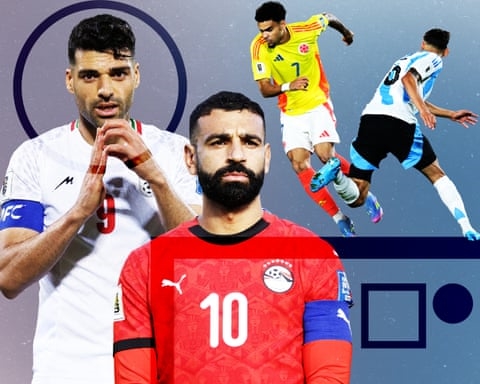
With the 2026 FIFA World Cup on the horizon, the field of 48 teams is rapidly taking shape. Forty-two nations have now secured their tickets to the tournament across the United States, Canada, and Mexico, setting the stage for a truly global spectacle. The final six spots will be decided through a series of intercontinental playoffs scheduled for March.
Africa’s Representatives Are Set
The Confederation of African Football has finalized its lineup of nine direct qualifiers. Morocco, a semi-finalist in 2022, was the first African nation to book its place. They are joined by Egypt, Tunisia, Algeria, Ghana, Cape Verde, South Africa, Senegal, and Ivory Coast. Cape Verde will make its World Cup debut, becoming the second-smallest nation by population ever to qualify.
The drama for Africa’s final spot unfolded in a playoff tournament in Morocco. After a gripping penalty shootout in the final, the Democratic Republic of Congo emerged victorious, earning the right to represent Africa in the upcoming intercontinental playoffs.
Asian Contenders Ready for Challenge
Asia will be represented by eight teams. Japan and South Korea continued their remarkable consistency, qualifying for their eighth and eleventh consecutive tournaments, respectively. They are joined by regional powers Iran, Saudi Arabia, and Australia, as well as Qatar, which makes a second straight appearance after hosting in 2022.
The continent also welcomes two debutants. Jordan, the 2023 Asian Cup runners-up, qualified for its first-ever finals, while Uzbekistan ended its long wait for a maiden World Cup berth. Iraq secured a dramatic playoff spot with a last-gasp aggregate victory over the United Arab Emirates.
European Powerhouses Confirm Status
Twelve European nations have qualified directly as group winners. England and France cruised through their campaigns, while Portugal sealed its place with a commanding victory. Germany, Spain, and the Netherlands all confirmed their expected participation.
There were also stories of long-awaited returns. Scotland qualified for its first World Cup since 1998 in dramatic fashion, a feat matched by Austria and Norway. Erling Haaland’s 16 goals were instrumental in propelling Norway to its first finals in 28 years.
Twelve other European nations, including Italy, Wales, and the Republic of Ireland, have secured places in the UEFA playoffs this November, hoping to clinch the confederation’s four remaining spots.
Americas and Oceania Fill Their Quotas
In South America, reigning champion Argentina leads a familiar contingent that includes Brazil, Uruguay, Colombia, and Ecuador. Paraguay returns to the stage for the first time since 2010. Bolivia secured the confederation’s playoff berth with a surprise win over Brazil.
The North American region sees its three hosts—the United States, Canada, and Mexico—joined by three direct qualifiers: Curaçao, Haiti, and Panama. Curaçao, with a population of just 156,000, will be the smallest nation ever to compete at a men’s World Cup. Jamaica and Suriname will contest the intercontinental playoffs.
Oceania’s direct place was claimed by New Zealand, which returns to the World Cup after a 16-year absence. New Caledonia will compete in the intercontinental playoffs as the runner-up.
The final pieces of the 2026 puzzle will fall into place in March, when the last six nations earn their passage to what promises to be the most expansive World Cup in history.