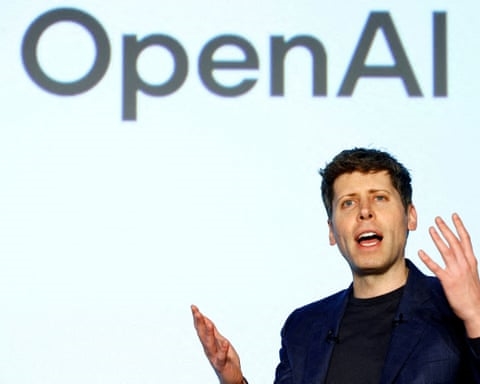
The central challenge facing OpenAI is one of staggering scale: how to finance a future requiring an estimated $1.4 trillion in computing infrastructure while its current financials remain deep in the red. This tension between immense future costs and present-day losses is becoming a focal point for broader market anxiety about the sustainability of the artificial intelligence boom.
At the core of the issue is “compute”—the processing power needed to develop and run advanced AI models. OpenAI’s commitment to securing this infrastructure over the coming years represents a financial burden that utterly dwarfs its reported annual revenue, which the company states has now surpassed $13 billion. The sheer magnitude of this gap has prompted intense scrutiny from investors and industry observers alike.
Recent public statements from the company’s leadership have done little to quell concerns and, at times, have added to the confusion. CEO Sam Altman engaged in a terse exchange with a prominent investor who questioned the financial math, bluntly offering to find a buyer for the investor’s shares. Subsequently, comments from the Chief Financial Officer about potential government backing for chip spending sparked a minor firestorm, forcing rapid clarifications that the firm was not seeking a taxpayer-funded safety net.
Analysts note that OpenAI’s strategy pits it against technology titans like Google and Meta, which can fund their own massive AI investments from existing, highly profitable businesses. OpenAI, by contrast, must essentially build its financial engine from scratch to compete at this level. Its plan involves complex, circular financing deals with partners like Oracle and Nvidia, where infrastructure spending and investment are closely intertwined.
The company’s fundamental bet rests on an explosive growth in demand. Altman has projected annualized revenue will exceed $20 billion this year and climb into the “hundreds of billions” by 2030. This optimism is fueled by its massive user base and the belief that AI utility will only increase. Revenue streams are expected to expand from consumer subscriptions to corporate AI services and even future hardware ventures.
However, skepticism persists. Some experts point to recent data suggesting a slowdown in AI adoption among large U.S. businesses, indicating that the initial wave of enthusiasm may be giving way to more measured, practical assessments of the technology’s value. Critics argue that without significant new technical breakthroughs, the company’s revenue targets may be overly ambitious.
OpenAI maintains that business adoption is accelerating, but acknowledges the gamble inherent in its strategy. The ultimate verdict, as Altman himself has conceded, will be delivered by the market. The question hanging over the entire sector is whether the future value created by AI will be vast enough to justify the historic levels of investment being pledged today, or if the industry is headed for a reckoning.