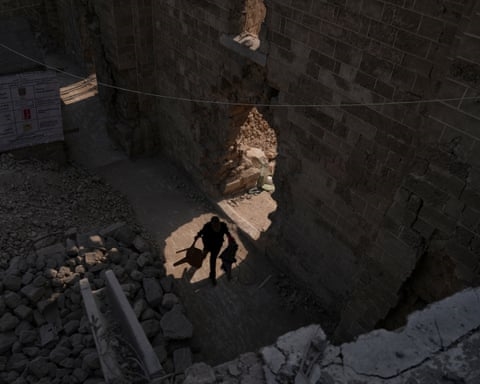
The arithmetic of death in Gaza is so vast it defies human comprehension. To attend a funeral for each life lost since the start of this year would require a solemn procession lasting nearly two millennia. This staggering toll, comprised of individuals burned, torn, and crushed, is the backdrop against which so-called peace efforts repeatedly falter.
International summits are convened, bearing optimistic banners, yet systematically excluding the very people whose future they purport to decide. The pattern that follows is grimly predictable. A ceasefire is declared, only to be immediately undermined by renewed military actions, blocked aid, and the ongoing destruction of civilian infrastructure. This cyclical violence is not a series of accidents but a deliberate strategy: ratchet up aggression, briefly dial it back under the label of “restraint,” then cite any Palestinian response as justification for a pre-planned escalation.
This tactic has a long history. For decades, periods of nominal calm have been used as cover to advance irreversible facts on the ground, particularly through the relentless expansion of settlements in occupied territory. Recent years have seen an acceleration of this process, with record land seizures, home demolitions, and settlement approvals that fragment Palestinian communities and erase the possibility of a contiguous state.
The objective extends beyond immediate military dominance to the systematic dismantling of the means of life itself. Critical infrastructure—hospitals, universities, water systems, and agricultural land—is targeted. This mirrors historical campaigns of control, where destroying a people’s capacity to sustain themselves proved as effective as direct confrontation.
Official rhetoric from leading figures leaves little ambiguity about the end goal, openly discussing the removal of Palestinians and the absorption of their land. The international community’s response, however, remains mired in a cycle of performative diplomacy and muted condemnation, treating each new violation as an isolated breach rather than an integral component of a decades-long project.
In this context, the very language of “peace process” becomes a cruel parody. It describes not a journey toward justice, but a piecemeal process of dispossession. True peace cannot be built on a foundation of graves, apartheid, and systemic hunger. It cannot exist while one group is denied fundamental rights and self-determination.
The resilience of the Palestinian people, embodied in every child born into these conditions, stands as the ultimate rebuttal to a logic of eradication. Their continued existence is a testament to the failure of a strategy that mistakes control for security and domination for peace. Until the underlying imbalance of power and rights is addressed, declarations of ceasefire will remain nothing more than temporary pauses in a perpetual war.