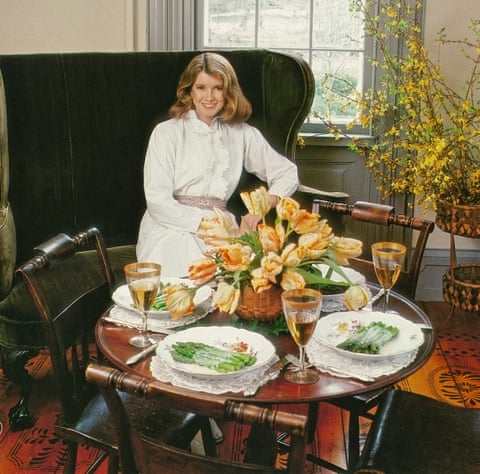
Long before she became a household name, a caterer in Connecticut envisioned a dinner party so specific it bordered on the surreal: a Hawaiian luau held in a November greenhouse. The centerpiece was a suckling pig adorned with tropical flowers. The serving vessels were giant clam shells. This was the work of Martha Stewart, captured in her seminal 1982 book, Entertaining.
To call Entertaining merely a cookbook is to undersell its peculiar genius. It is a volume of extravagant, often bewildering, domestic prophecy. Its pages advise on sourcing a silver samovar for a Russian-themed evening, propose a single, massive Bermuda onion as a table centerpiece, and calmly instruct the reader to prepare one hundred lobsters. It is a manifesto for the host who views a dining room not as a space for a meal, but as a stage for an unforgettable, if slightly unhinged, production.
Superficially, Stewart’s philosophy represents everything modern sensibilities might reject: it is opulent, labor-intensive, and wildly impractical. The contemporary ethos of hosting champions ease and authenticity—think of the casual, ingredient-focused gatherings popularized by today’s culinary stars. We have moved away from the formal “dinner party” toward simply “having people over,” where the goal is shared comfort, not theatrical spectacle.
Yet, in our collective retreat from 1980s-era excess, have we lost something vital? Entertaining posits a radical idea that has become obscured: that hosting should be, above all, fun. Not fun in the sense of being effortless, but fun as an act of creative rebellion against the ordinary. Stewart’s visions—from tempura parties to omelette brunches for sixty—argue that a memorable gathering doesn’t come from replicating a restaurant at home. It comes from embracing the whimsical, the personal, and the boldly imaginative feasts no professional establishment would ever attempt.
There is a thrilling perversity in her advice. It serves as a potent reminder that the rules are there to be broken, that a gathering can be an event, and that a little absurdity can be a generous gift to your guests. The book’s recent reissue, over four decades after its first publication, suggests a renewed appetite for this kind of culinary fantasy. It challenges the current orthodoxy of simplicity, not to advocate for exhausting perfectionism, but to reclaim a sense of wonder and play at the heart of sharing a meal.
Stewart’s most enduring lesson may be that the best hosting isn’t about what is easy or trendy. It’s about the courage to build a unique, momentary world around your table—whether that world features goblets of borscht or a piglet wearing a necklace of starfruit. In an age of curated casualness, that remains a deliciously subversive idea.