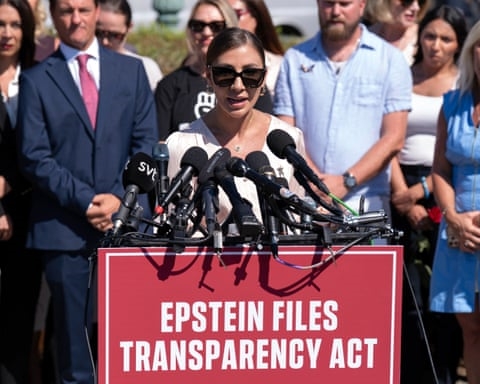
A woman who testified against the late financier Jeffrey Epstein is calling for the complete public release of all related documents, stating that transparency is crucial for accountability and for survivors to find closure.
Marina Lacerda, who first came forward publicly last autumn, described the recent release of thousands of pages by congressional investigators as a significant, yet incomplete, step. She expressed frustration that the full archive remains withheld, a situation she believes prevents a full understanding of the events and shields other potentially culpable individuals.
Lacerda was introduced to Epstein as a teenager in 2002. Initially told she would be paid for a massage, her first encounter at his New York residence involved unwanted advances and coercive behavior that quickly escalated into years of sexual abuse and manipulation. Epstein, she said, exploited her vulnerable status as a young immigrant and used threats related to her legal paperwork to maintain control and silence.
“He made it clear he believed he was above the law, that he had power over everyone,” Lacerda recounted, noting the intimidating display of photographs in his office featuring prominent political and royal figures. The abuse only ceased, she said, when Epstein told her she was “getting old” for him.
Her testimony later became a key component of the criminal case against Epstein. She reflects now on the long-held shame she carried, a burden only alleviated after breaking her silence. The decision to speak out was partly inspired by the advocacy of other survivors.
The push for document disclosure has become entangled in political disputes, with legislative delays attributed to partisan conflict. Lacerda emphasized that for survivors, the issue transcends politics.
“The debate over who is to blame for the delay isn’t what matters to us,” she stated. “What matters is that these files see the light of day. The public deserves the truth, and for those who lived through this, it is a necessary part of healing from the trauma. Full disclosure will finally allow for real accountability.”