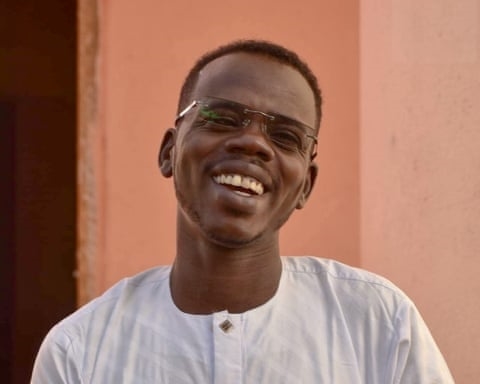
A prominent Sudanese activist, who for months provided crucial testimony from inside the besieged city of El Fasher, has been killed following the city’s capture by paramilitary forces. His death has sparked grave fears of a targeted campaign against civil society voices.
Mohamed Khamis Douda, the official spokesperson for the Zamzam displacement camp, became a vital conduit of information from the heart of what has been described as the world’s largest humanitarian crisis. Injured in a massacre at Zamzam earlier this year, he was evacuated to El Fasher, only to find himself trapped under a tightening siege.
In the months leading to the city’s fall, Douda chronicled a desperate existence defined by starvation and relentless bombardment. Supplies of food, water, and medicine were systematically choked off. Residents were forced to grind animal feed into a crude paste for sustenance, and later resorted to boiling cattle hides. Movement was perilous, with surveillance drones constantly overhead; even the glow of a cigarette was considered a risk.
Douda balanced his own struggle for survival with efforts to support his community, helping to distribute aid, document abuses, and organize burials for the dead. He believed his public reporting, including information about foreign mercenaries fighting alongside paramilitary forces, made him a target. Militiamen were reported to have circulated his photograph at checkpoints, asking those fleeing if he remained in the city.
His final communications painted a picture of a city on the brink. “I cannot leave the house any more, even to get some food,” he reported in one message, describing how community kitchens had been shuttered because volunteers could not move without being attacked. “Every day, they get closer and they are ready to kill everyone in El Fasher.”
Following the paramilitary assault and capture of El Fasher, Douda’s death was confirmed by family and associates. His killing occurred amid reports of other arrests and targeted violence, including the death of a former parliamentarian who ran a community kitchen. Human rights groups have raised the alarm, suggesting forces are actively hunting activists and examining phones for evidence of contact with media or rights organizations.
Advocates describe Douda’s loss as a devastating blow. “This is the loss of an entire generation of Sudanese activists,” stated one analyst, who noted reports of paramilitary forces possessing lists of civil society members. “He was one of the true heroes of this war, who gave his life to highlight these atrocities.”
Douda’s voice, which provided the world with a real-time account of the siege, has now been silenced, underscoring the extreme peril faced by those who dare to report from within the conflict.