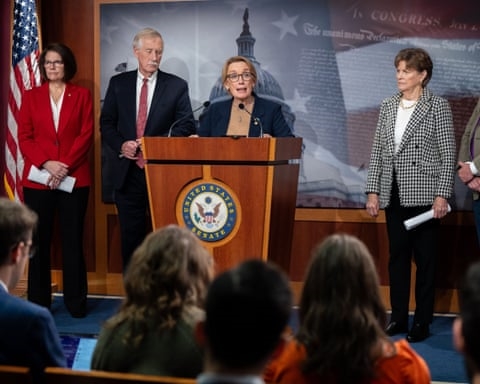
In a pivotal Sunday session, the U.S. Senate narrowly advanced a funding package aimed at reopening the federal government after a 40-day shutdown, the longest in the nation’s history. The procedural vote marks the most significant progress in weeks, yet the path forward remains fraught with political conflict, particularly in the House of Representatives.
The compromise bill, which secured the bare minimum of 60 votes needed to proceed, would authorize government spending through January 2026. It includes provisions to provide back pay for hundreds of thousands of furloughed federal employees and to reverse layoffs initiated after funding lapsed on October 1. The legislation also bundles several full-year appropriations bills for agencies including the Departments of Agriculture and Veterans Affairs.
However, the deal notably excludes a central Democratic demand: an extension of tax credits that reduce premiums for health insurance plans under the Affordable Care Act. These subsidies are set to expire at year’s end, a prospect analysts warn could cause premiums to spike by an average of over 25%. This omission has sparked fierce opposition from most Democratic lawmakers, who argue the agreement fails to address a looming healthcare crisis.
“The American people cannot afford inaction on healthcare,” said Senate Democratic leader Chuck Schumer, who voted against the measure. “Supporting a resolution that ignores this emergency is unconscionable when families are facing devastating cost increases.”
The bill advanced with support from nearly all Republican senators and eight members of the Democratic caucus, many of whom are moderates or retiring. Proponents argued it was the only viable option to end a shutdown that has inflicted widespread strain.
“After 40 days, the imperative to restore government operations and pay our dedicated workforce is clear,” said Republican leader John Thune. “From air travel disruptions to unpaid public servants, the consequences demand that we act now.”
The shutdown’s impact has been severe. Over 700,000 federal workers have been furloughed, with hundreds of thousands more working without pay, leading to increased reliance on food banks and social services. The Transportation Department has ordered reductions in commercial flight schedules due to strain on air traffic controllers, resulting in thousands of cancellations. A critical federal food assistance program has also paused payments, triggering legal challenges.
While the Senate vote represents a breakthrough, significant hurdles remain. The bill must now pass the House, where Democratic leaders have vowed to fight it. House Minority Leader Hakeem Jeffries called the Senate deal unacceptable, stating, “We will not support a spending bill that abandons working families by letting healthcare costs skyrocket.”
Further complicating matters, House Speaker Mike Johnson has kept the chamber out of session for weeks. Although lawmakers have been told to expect votes this week, the legislation faces a rocky reception. As part of the Senate compromise, Republican leaders pledged a vote on separate healthcare subsidy legislation by mid-December, but the House Speaker has indicated he will not bring such a measure to the floor.
The prolonged shutdown has dominated the political landscape, with recent polls suggesting the public largely holds congressional Republicans responsible for the impasse. Democratic leaders have framed the standoff as a battle over healthcare affordability, a core party issue.
With the Senate adjourned until Monday, the timeline for final passage is uncertain. The nation now watches to see if a deeply divided Congress can finally resolve a crisis that has halted paychecks, disrupted travel, and stretched the social safety net.