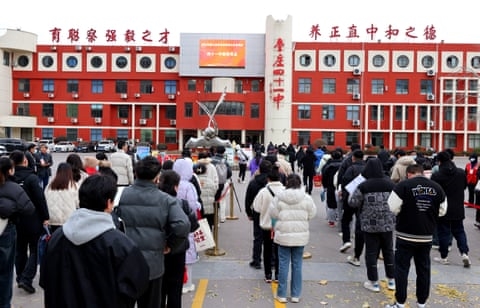
This weekend, millions across China will sit for the intensely competitive national civil service examination, a pivotal moment reflecting a profound shift in the nation’s employment landscape. Amid economic uncertainty, a growing number of workers are seeking the stability of public sector careers over the volatility of private enterprise.
Official figures indicate approximately 3.7 million individuals have registered for the tests, a new high. This surge follows a recent policy adjustment that raised the eligibility age for candidates. The standard age limit has been extended from 35 to 38 years, while the cap for those holding postgraduate degrees has increased from 40 to 43.
These applicants are competing for roughly 38,100 available positions nationwide, translating to an average of 97 candidates for each opening. Competition for some roles is exceptionally fierce. Reports highlight one immigration officer vacancy in a southwestern border city that attracted over 6,400 approved applicants.
The decision to raise the exam age limits aligns with broader national reforms to gradually increase the official retirement age, a response to demographic pressures and pension system sustainability. This change is particularly significant in a job market where many private companies are perceived to discriminate against candidates over the age of 35.
Public sector roles, often referred to as the “iron rice bowl” for their traditional promise of lifelong employment, are increasingly coveted. While salaries may be lower than in some private industries, the benefits of job security, pensions, and stable contracts hold powerful appeal during times of economic strain. This trend marks a notable reversal from previous decades when many sought opportunity and higher income by “jumping into the sea” of private business.
Analysts point to structural changes in the economy as a key driver. “The job market has seen a shift away from stable, higher-skilled roles in sectors like manufacturing toward more precarious, informal work,” noted one economics researcher. “With millions of graduates entering the workforce annually and benefits in the private sector often weak or absent, the preference for government jobs is understandable.”
Current economic challenges, including subdued consumer demand, have exacerbated employment anxieties, particularly among the young. Official youth unemployment data, which was revised and resumed publication after a pause, remains a point of focus. The phenomenon of “lying flat”—opting out of the high-pressure job hunt—continues to resonate with some graduates.
Preparing for the rigorous exam, which tests knowledge across law, sciences, politics, and reasoning, is a formidable task. Recent revisions have also added a section evaluating the application of political theory to practical problem-solving. For many aspirants, especially older candidates balancing work and family, preparation requires immense sacrifice, with stories circulating online of intensive pre-dawn study sessions squeezed between professional and caregiving duties.
As the testing date arrives, the record turnout underscores a collective search for security in an evolving economic environment, setting the stage for one of the nation’s most consequential career gateways.