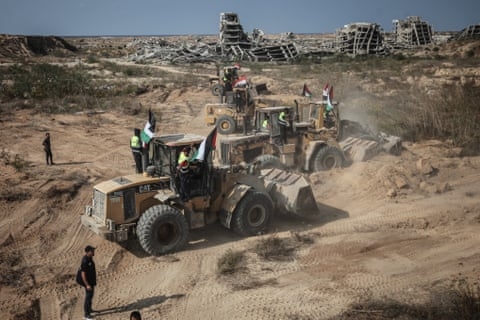
A proposed framework for the future of Gaza envisions a divided territory, with a secure, internationally-administered sector set against a separate, devastated area where the vast majority of the displaced population currently resides.
According to security planning documents and sources familiar with the discussions, the strategy involves the creation of a “green zone” in eastern Gaza. This area would be secured by a combination of international forces and Israeli troops, and would serve as the initial focal point for reconstruction efforts. It would be separated from the rest of the territory by the current Israeli military demarcation line.
The remainder of the coastal strip, described in plans as a “red zone,” would encompass the heavily damaged central and western regions. No large-scale rebuilding is currently planned for this sector, where nearly the entire Palestinian population has been displaced.
The plan is part of a broader, rapidly evolving international effort to establish security conditions following the recent ceasefire. A proposed United Nations Security Council resolution to authorize an international stabilization force is anticipated in the coming days. However, firm commitments of troops from member states are not expected until the resolution’s language is finalized.
The envisioned force would operate exclusively within the proposed secure zone. Initial deployments would be small, with the potential to grow significantly over time. The stated long-term objective is to create conditions that could eventually lead to the territory’s reunification and a transition to civilian governance, though no timeline exists for such a process.
Key elements of the planning have faced immediate practical and political challenges. Early proposals for troop contributions from several European nations have been met with skepticism, described by one source as unrealistic given the risks involved. Similarly, listed contributions from regional partners have contradicted their publicly stated positions.
The strategy also hinges on using reconstruction within the secure zone as an incentive for civilians to relocate across the current line of Israeli control—a concept that draws implicit comparisons to past, contentious international interventions.
With over 80% of structures in Gaza damaged or destroyed, the humanitarian need is acute. Aid delivery remains constrained, and millions are living in overcrowded conditions in the coastal area with limited access to shelter, clean water, and basic services, underscoring the urgent challenges facing any post-ceasefire arrangement.