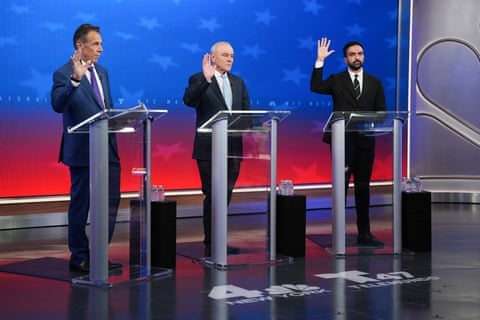
Voters in New York City head to the polls Tuesday in a contest that will not only determine the leadership of the nation’s largest metropolis but also send a powerful signal about the direction of the Democratic Party. The election has evolved into a stark clash of political visions, with implications that will resonate far beyond the city’s five boroughs.
The race features a dramatic showdown between a surging progressive champion and a seasoned political veteran mounting an aggressive comeback. On one side is Zohran Mamdani, a 34-year-old democratic socialist whose campaign, centered on tackling the city’s affordability crisis with proposals like a rent freeze, has galvanized a grassroots movement. His opponent is Andrew Cuomo, the former governor running as an independent with substantial financial backing, who has framed the election as a referendum on law and order.
Recent polling consistently shows Mamdani holding a commanding lead, positioning the once-longshot candidate as the clear favorite. His campaign has been marked by high energy, a robust volunteer network, and a platform appealing to voters frustrated by economic inequality.
Cuomo, however, has signaled a determined, no-holds-barred effort to close the gap. His campaign’s tactics have drawn widespread criticism in the race’s final stretch, including his response to a radio host’s inflammatory, Islamophobic comments about Mamdani, who is Muslim. Cuomo was also forced to apologize for an AI-generated campaign video that trafficked in racist stereotypes. These incidents have underscored the bitterly personal tone the contest has adopted.
The outcome is viewed as a critical test for a Democratic Party grappling with its strategic identity. A decisive victory for Mamdani would be interpreted as a robust mandate for his progressive economic agenda, potentially pressuring national party leaders to embrace a more assertive stance on issues like housing and inequality. His candidacy has already ignited a level of enthusiasm within the party’s base not seen in years.
Conversely, an upset win for Cuomo would likely reinforce a more cautious, centrist approach among the party’s establishment, despite growing discontent from its activist ranks. It would suggest that in America’s largest city, a message of stability trumped one of transformative change.
Amid the heated exchanges, Mamdani has sought to elevate the discourse. In a widely viewed response to attacks questioning his faith and patriotism, he delivered an emotional reflection on the experience of Muslim Americans, a moment that resonated with many voters and seemed to crystallize the election’s stakes.
As New Yorkers prepare to cast their ballots, the question is whether they will endorse a bold, progressive blueprint for the city’s future or opt for the familiar politics of a former governor promising a tough-on-crime restoration. The answer will echo through the halls of power in Washington.