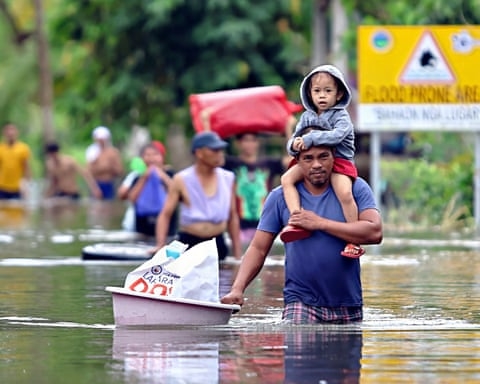
A massive evacuation effort is underway in the Philippines as a powerful storm system, now classified as a super typhoon, bears down on the nation’s eastern coastline. Authorities report that over a million residents have been moved to safety in anticipation of the cyclone’s arrival.
The storm, known locally as Uwan, is expected to bring destructive winds exceeding 185 kilometers per hour and torrential rainfall. Its approach comes just days after another major typhoon struck the country, a disaster that left hundreds dead or missing. Search operations from that earlier event have been temporarily halted due to the new threat.
Initial casualties have already been reported. Officials confirmed two fatalities on Sunday, including a woman who was trapped when her home collapsed as she attempted to evacuate. Rescuers described harrowing conditions, with powerful winds and heavy rain complicating efforts.
The storm’s core is forecast to make landfall overnight on the island of Luzon, a prospect that is causing significant anxiety. “The fear is that the landfall will happen in darkness,” one resident preparing his home stated. “We won’t be able to see the wind’s movement or what is happening around us.”
In response to the imminent danger, the government has suspended classes and closed offices across Luzon, including in the capital, Manila, where air travel has been severely disrupted with hundreds of flight cancellations. Defense officials have issued urgent appeals for compliance with evacuation orders, emphasizing that refusal not only endangers individuals but also the emergency personnel who might later be forced into perilous rescue missions.
On the island of Catanduanes, projected to suffer a direct hit, the storm’s impact was already being felt. Residents described roaring waves that made the ground shake and shared footage showing neighborhoods submerged by floodwaters. In other towns, streets have been transformed into violent rivers.
Government forecasters warn the typhoon could dump more than 200 millimeters of rain across wide areas. This storm marks the 21st significant weather disturbance to impact the archipelago this year, testing the limits of national disaster preparedness.
Meteorological experts note that such intense storms are increasingly fueled by warmer ocean temperatures, which allow them to intensify quickly, while a warmer atmosphere can hold more moisture, leading to more extreme rainfall events.