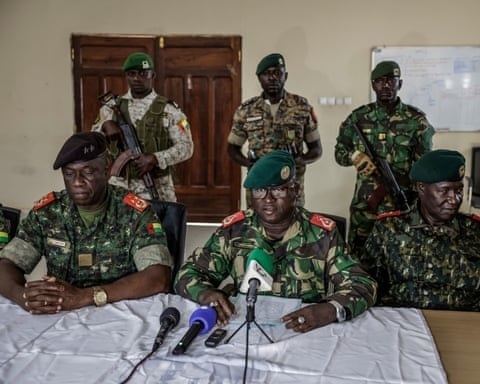
The military in Guinea-Bissau has declared it is assuming complete authority of the nation, effectively suspending the electoral process and sealing the country’s borders. This decisive action follows a disputed presidential vote held three days ago, where both the incumbent and his primary challenger have declared victory.
In an announcement broadcast on national television from the army headquarters in the capital, Bissau, officers stated they had established a “high military command for the restoration of order.” This body will govern the country indefinitely.
The move comes after reports of gunfire near key government buildings, including the presidential palace and the national election commission, earlier in the day. The origins of the shooting remain unclear, with supporters of the opposing political camps each blaming the other for the violence.
This intervention marks the latest chapter in a long history of political instability for the West African nation. Since gaining independence in 1974, the country has experienced numerous coups and attempted seizures of power. The current crisis stems from a contested election where both President Umaro Sissoco Embaló and his main opponent, Fernando Dias, asserted they had secured a first-round victory.
The election commission had been scheduled to release preliminary results. President Embaló, who was seeking to become the first leader in three decades to win a second term, has previously stated he survived multiple coup attempts during his tenure. Critics, however, have alleged that some of these incidents were staged to justify cracking down on political opposition.
The nation of 2.2 million people, with a deeply fragile economy, has also long been identified as a major transit point for international drug trafficking, a factor that has historically complicated its governance and security.