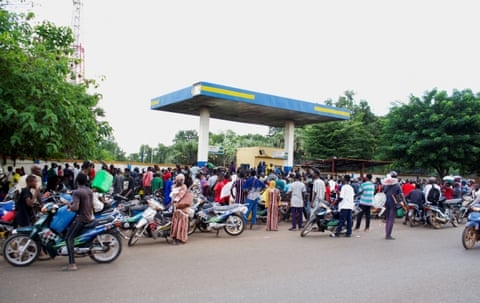
A severe fuel blockade imposed by jihadist forces is crippling Mali’s capital and pushing the nation toward a potential political collapse. The al-Qaeda-affiliated group Jama’at Nusrat ul-Islam wa al-Muslimin (JNIM) has effectively cut off key supply routes, stranding fuel tankers and creating widespread shortages in Bamako.
The blockade has brought daily life to a halt. Long queues form at the few functioning gas stations, electricity is unreliable, and many businesses and schools have closed. With the landlocked nation dependent on imports, the disruption of truck convoys from neighboring countries has triggered a rapid economic and social breakdown.
This crisis has escalated international alarm. Multiple governments, including those of the United States, Australia, Germany, and Italy, have recently issued urgent advisories for their citizens to leave Mali, citing the deteriorating and unpredictable security situation in the capital.
Analysts warn the nation is at a precipice. The current military junta, which seized power in coups beginning in 2020, faces mounting pressure as essential supplies dwindle. There is growing speculation about the stability of the ruling council and the possibility of further military intervention. The junta’s promises to restore democratic elections have repeatedly been postponed, while its security partnership with the Wagner Group has drawn condemnation for human rights abuses.
The insurgency’s reach is expanding. Beyond tightening its grip in central Mali, JNIM has extended operations into coastal West African states. In areas it controls, the group enforces a strict interpretation of Islamic law. Observers note that the potential fall of Bamako could set a trajectory for Mali to become an Islamist state, a long-stated goal of the jihadist faction.
Internal dynamics complicate the crisis. Public protest against the junta has been muted, partly due to fears that its collapse could pave the way for an immediate jihadist takeover. Meanwhile, there are reports of friction within the military leadership and discussions about the possible return from exile of influential cleric Mahmoud Dicko. Some suggest JNIM views him as a potential negotiating figure, aiming to bypass the current government entirely.
Isolated diplomatically after severing ties with regional allies and facing frosty relations with Western nations, the Malian junta appears increasingly cornered. With fuel stocks running critically low and the insurgent noose tightening, the coming days are seen as decisive for the future of the country and the wider Sahel region.