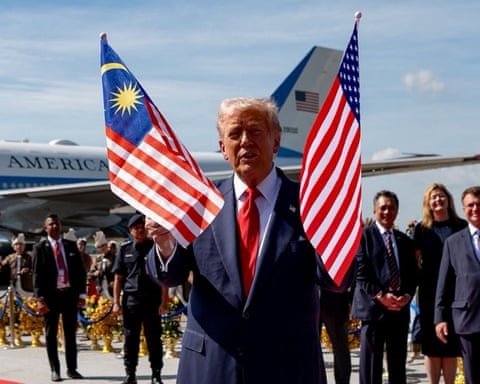
KUALA LUMPUR — A newly signed trade agreement between Malaysia and the United States has ignited a fierce domestic debate, with the government vigorously defending the pact against mounting criticism that it undermines national sovereignty and economic independence.
The agreement, finalized during a recent visit by former U.S. President Donald Trump, has been championed by officials as a strategic necessity and an economic boon. Investment, Trade and Industry Minister Tengku Zafrul Aziz described it as the optimal result for the nation, citing the imperative of engaging with its largest trading partner. “As a trading nation, we must navigate the realities of the global economic landscape,” Aziz stated.
However, the deal has drawn fire from a broad coalition of opposition figures, analysts, and civil society organizations. Central to the controversy is a clause requiring Malaysia to align its economic sanctions and restrictions with those imposed by the United States against third countries. Critics argue this provision effectively compels Malaysia to follow Washington’s foreign policy dictates, potentially forcing it into international disputes against its own interests.
A prominent former prime minister labeled the agreement’s terms a surrender of autonomy, arguing it obligates Malaysia to purchase specific American goods, adhere to U.S. digital regulations, grant preferential access to its rare minerals, and open its markets on foreign terms. “This agreement hands over our right to make independent decisions,” the former leader asserted.
Opposition voices have echoed these concerns, warning that the clause could force Malaysia to sever trade ties with nations like China or Russia if demanded by the U.S., regardless of the economic consequences. They contend this erodes the neutral foreign policy that has long served as a cornerstone of the nation’s diplomacy.
Independent policy analysts have noted the pact appears disproportionately favorable to American interests, placing a new burden on Malaysian officials to vigilantly avoid entanglements in external geopolitical conflicts. A transparency watchdog has further raised alarms, suggesting certain provisions could allow major investments to circumvent standard national procurement laws and regulatory oversight.
In response to the backlash, the government has launched an informational campaign, including a detailed public FAQ document, to allay fears. Authorities have emphasized that the agreement includes a unilateral exit clause, allowing Malaysia to withdraw at any time. The pact is scheduled for review by a special parliamentary committee in the coming days, setting the stage for continued political deliberation over its final ratification.