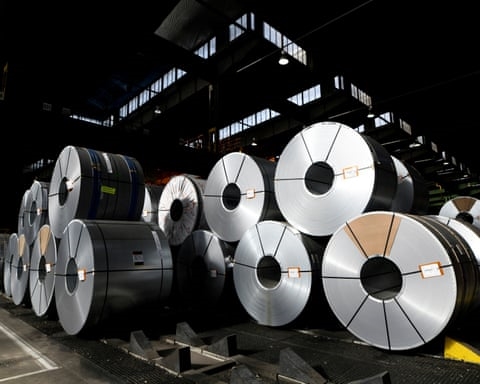
Businesses across the globe are preparing for a significant expansion of U.S. import duties, as American firms push for hundreds of additional products containing steel to face higher taxes. This move signals a potential new phase in trade policy that could impact a wide array of goods, from industrial machinery to consumer items.
Following an initial round of tariffs imposed in August on over 400 products, U.S. companies have submitted requests to add approximately 700 more items to the list. These submissions, made ahead of a late October deadline, target so-called “steel derivatives”—finished goods that incorporate steel components. The scope of products under consideration is broad, including bicycles, commercial baking equipment, canned food containers, truck parts, and various industrial machines.
Industry observers note that nearly all requests were approved in the first round, leading to concerns that a similarly high acceptance rate is likely this time. If enacted, the new tariffs could take effect as early as December or January, imposing substantial additional costs on exporters worldwide.
The push for expanded tariffs is creating particular unease in Europe. Recent trade agreements between the U.S. and both the European Union and the United Kingdom established baseline tariff rates, with significantly higher duties specifically for steel. European exporters now argue that layering these new “derivative” tariffs on top of existing frameworks undermines those agreements, effectively subjecting many goods to double taxation.
Several U.S. manufacturers have publicly advocated for the measures. A bicycle company cited intense import competition, while a Midwestern tomato canner argued that foreign-made finished cans enter the U.S. without facing equivalent levies, putting domestic producers at a disadvantage. Similarly, makers of commercial baking pans have pointed to low-cost imports as a threat to their market.
Trade analysts view the latest consultation as evidence of an “expansionist” U.S. approach to tariffs. They suggest it introduces renewed uncertainty into transatlantic trade relations, despite recently negotiated deals. The situation underscores a growing trend where tariffs initially applied to raw materials are being extended to a much wider range of manufactured goods, a development with potentially far-reaching consequences for global supply chains and international trade dynamics.
A final decision on the expanded tariff list is anticipated in December.