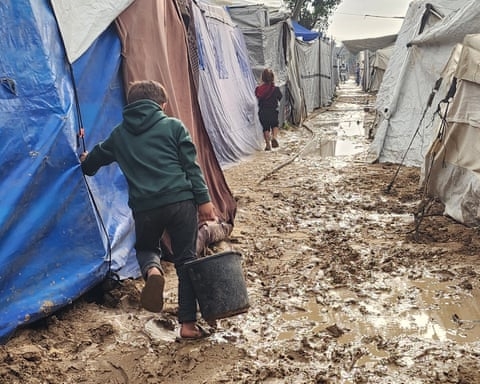
The first major storm of the season has laid bare the dire conditions facing hundreds of thousands of displaced Palestinians in Gaza, with the onset of winter raising fears of widespread disease, hunger, and exposure.
In the crowded coastal area of al-Mawasi in southern Gaza, where makeshift tent cities have sprung up, last week’s heavy rains and winds destroyed fragile shelters and soaked the few belongings of families. Many residents, displaced multiple times since the conflict began over two years ago, now face their third winter away from home with minimal protection from the elements.
Humanitarian organizations identify shelter as the most critical need. A vast number of homes across the territory have been destroyed or are located in areas now off-limits, leaving displaced populations with nowhere to go. Following the storm, some sought refuge in damaged buildings at risk of collapse, their shattered walls patched with plastic sheeting.
While increased aid flows have alleviated the most extreme starvation, officials report that supplies remain grossly insufficient. A senior official with a major international aid group stated that while the situation has improved from outright famine, distribution is hampered by logistical and bureaucratic obstacles, preventing the delivery of vital items like winter-ready tents and shelter materials.
The challenge of delivering aid persists, with reports of complex clearance processes slowing the work of major relief agencies. Some essential items are reportedly barred from entry over dual-use concerns. Israeli authorities coordinating entry into Gaza have stated they have facilitated the distribution of thousands of tarpaulins but note that many tents supplied are designed only for summer use.
For those with funds, a tent can cost around $800 in local markets—a sum far beyond the reach of most after two years of war. Many families rely on sporadic meals from community kitchens and struggle to access clean water. A 29-year-old former painter from northern Gaza described his family’s diet as consisting mainly of canned beans and peas, with a single meal from a public kitchen every few days.
Healthcare workers warn that the lack of basic infrastructure, proper drainage, and clean water in the camps is creating a sanitation crisis, with standing rainwater compounding the risks of disease. The recent storm also brought seawater surges that flooded tents along the shore.
As temperatures are set to drop further in the coming weeks, residents express profound anxiety. A 62-year-old woman displaced from Khan Younis described how the storm destroyed her shelter twice in one night. “We lack all winter essentials,” she said. “Diseases have spread among us… and this is just at the start of winter.”
Another woman, now living on the shore in al-Mawasi, contrasted her current reality with memories of a warm home before the war. “Now, we cannot even light a fire to cook,” she said, appealing for mercy and assistance as a harsh winter takes hold.