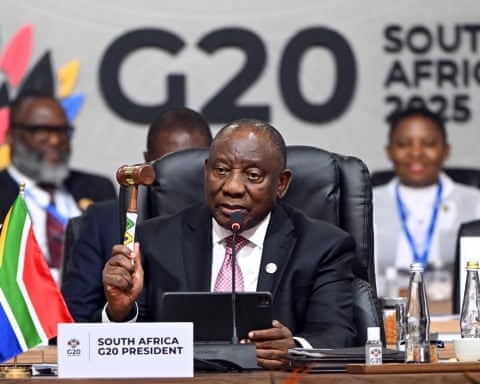
The G20 summit in Johannesburg concluded with a symbolic gavel strike by the host nation’s leader, following a diplomatic dispute over the ceremonial handover to the next presiding country. The gathering, intended to showcase global cooperation, was overshadowed by the notable absence of one major member state and disagreements over procedural formalities.
In his closing remarks, the summit’s chair emphasized the collective resolve of the members to address shared challenges and work toward a more equitable world. The formal closure included a brief acknowledgment that the leadership of the forum would pass to the United States, which is scheduled to host the next meeting.
The summit’s final communiqué, agreed upon by most participants, outlined shared commitments on pressing international issues, including climate action and the pursuit of peace in several global conflict zones. The declaration’s language on certain regional disputes, however, led one member to withhold its full endorsement, citing a lack of nuance.
A central point of contention emerged not from the summit’s policy agenda, but from the protocol surrounding the transition of the G20 presidency. The host nation declined a proposed arrangement for the handover ceremony, citing diplomatic precedence. Officials from the country set to assume the presidency criticized this decision, framing it as a breach of the forum’s cooperative spirit.
The upcoming summit is planned for a location in Florida. The recent meeting also saw the absence of several other world leaders, with various nations sending alternate representatives.
The G20, which includes the world’s largest economies and the European Union, was established to foster international economic cooperation. The recent expansion of its membership to include the African Union was seen as a step toward broader representation.