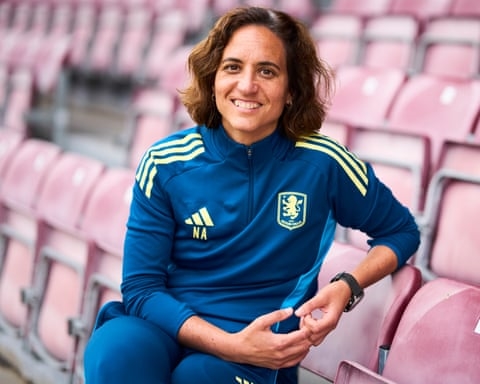
A defining moment arrived not on the turf, but in the solitude of a locker room. At 22, facing a second devastating ACL injury, a young footballer understood her time as a player was over. That moment of raw emotion marked an end, but also an unplanned beginning.
Natalia Arroyo’s football journey started early, joining Barcelona’s ranks as a child. She rose through the youth system, captaining the B team and breaking into the senior squad as a teenager alongside two peers. That early experience, she reflects, taught her valuable lessons about player integration. While having contemporaries provided comfort, she believes true adaptation sometimes requires stepping out alone to develop one’s own resilience and voice.
Her playing career, which included helping Barcelona secure promotion, was ultimately derailed by injuries. A subsequent move to Espanyol coincided with her university studies, but a second major knee injury in the second division prompted a decisive turn. The competitive fire that drove her was incompatible with a lower standard, leading her to step away from playing entirely.
Her post-playing path seemed set in journalism. A degree in visual communications led to work in commentary, punditry, and writing. Coaching, though she had obtained her badges and helped in academies, was not the primary plan. Looking back, she recognises the instincts were always there—deployed as a captain and a communicative player in central roles, often trusted by coaches to guide teammates.
The shift began when she combined her media work with coaching the Catalonia national team. This role became a crucial development space, focusing on talent identification, rapid team-building, and distilling critical tactical information. Coaching high-calibre players there allowed her to implement her preferred style of play.
The desire to test herself in club football grew. Uniquely, her journalism career became a tool for preparation. She approached interviews and training ground visits not just as a reporter, but as a student of management, mentally cataloguing how different coaches handled various challenges, from injuries to squad dynamics.
When the opportunity to manage Real Sociedad arose in 2020, it was a leap into the unknown. The club showed patience, and her tenure culminated in a second-place league finish and a domestic cup final appearance. The process that led to her current role in England was similarly meticulous, involving extensive analysis of the European game. The challenge of managing outside Spain proved a compelling draw, despite the inherent nerves.
Taking charge last season, she inherited a team in need of direction. Initial results were tough, with a string of league defeats. She openly admits to sharing the players’ fears during that period, questioning her own immediate impact. The focus, she insisted, had to be on a deeper structural change and a collective belief in a long-term process, fostered through constant communication.
That faith was ultimately rewarded with a strong finish to the campaign. Now, with the team showing competitive consistency, the manager points to more than just results. She expresses pride in the cultural foundations being laid and the stronger club environment being built, suggesting the most significant victories often happen away from the public eye.