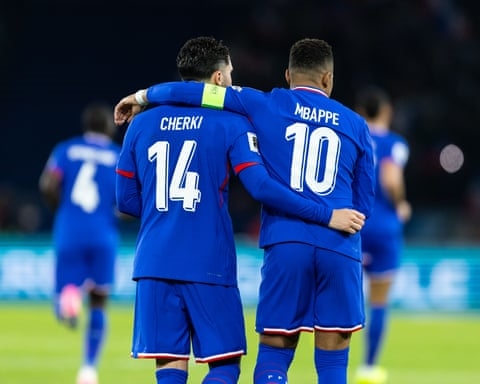
A dominant 4-0 victory over Ukraine at the Parc des Princes confirmed France’s place at next year’s World Cup. The result, however, arrived on a somber evening, marking ten years since the tragic attacks that began at the same stadium. The national team manager acknowledged the weight of the occasion, stating it was a match he wished could have been avoided on this particular date.
The fixture also marked a personal milestone, being the manager’s final competitive game on home soil before his planned departure after the tournament. While he publicly dismisses nostalgia, his recent squad selections tell a different story, revealing a delicate balancing act between proven veterans and emerging talent as he prepares for one last campaign.
A sense of trust appears to be a driving force, with several experienced players, including N’Golo Kanté, retaining their places despite club careers taking them outside Europe’s top leagues. The manager defended his continued selection of certain forwards, citing fitness and logic, even as their club form raises questions. This reliance on familiar faces is partly born of necessity, with injuries depleting the midfield and the international retirements of several iconic figures following the last European Championship creating a significant experience gap.
In response, a policy of refreshing the squad has introduced exciting new options. Players like Michael Olise have made an immediate impact, while others from clubs like Monaco and Liverpool are breaking into the setup. The challenge now is integrating these pieces into a cohesive unit.
This integration issue was glaringly apparent in the first half against Ukraine. The performance was described as “laborious” and “shy,” with a disjointed attack struggling to connect. The manager pointed to a “lack of combinations,” with large gaps between the forwards. This highlighted a tactical shift still in progress: the team is adapting to life without its former central striker, a selfless figure who excelled at bringing others into play.
His successor in the number nine role is now firmly established, playing there for both club and country. However, the dynamic is different. The first half saw promising crosses from the wings finding empty space, underscoring a occasional lack of presence in central areas. Adjustments at halftime, bringing the attacking trio closer together, paid immediate dividends, sparking a four-goal flurry in 33 minutes. The captain netted twice, moving within striking distance of the national team’s all-time scoring record, while the younger forwards also found the net.
One substitute’s performance, in particular, offered an alternative approach. His willingness to operate as a focal point in the penalty area provided a different dimension, even if it is not his primary strength. Another highly involved creative player, meanwhile, saw much of the ball but struggled to influence the game decisively, suggesting that understanding with the team’s star forward is still a work in progress.
Building that synergy will be paramount. The captain is undoubtedly the centerpiece of the team’s ambitions, and his return to peak form is a major boost. As the manager noted, a national team operating with him at this level presents a formidable challenge for any opponent.
For France to achieve the historic feat of reaching a third consecutive World Cup final, the pieces around their talisman must not only fit but enhance his game. This requires a new tactical blueprint, moving away from a system once built around a facilitating striker to one that maximizes a different kind of attacking threat.
With the World Cup on the horizon, the final composition of this team remains unclear. It is an unfinished project, a final campaign for its long-serving manager that may, by its very nature, be a work perpetually in progress as he seeks the right blend to compete for football’s ultimate prize.