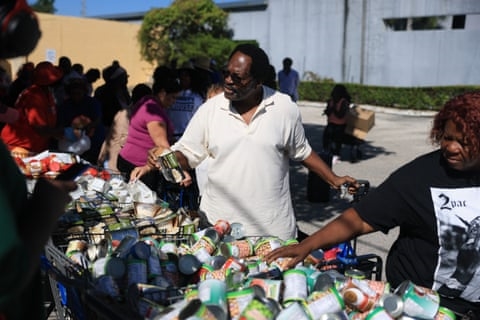
Food banks across the United States are urgently stockpiling supplies as a critical federal nutrition program faces an unprecedented suspension. The Supplemental Nutrition Assistance Program (SNAP), which helps millions of families afford groceries, is set to lose funding, leaving charities to confront a wave of need they are not equipped to handle.
The program’s funding is expiring amid a prolonged government shutdown, now in its second month. While federal courts have issued orders to block the suspension of benefits, the situation remains unresolved, casting uncertainty over the assistance relied upon by approximately 42 million Americans.
Charitable organizations report a sharp increase in inquiries from anxious families. “We’re getting more calls than ever from people saying their benefits are being cut and they need a plan,” said the founder of one community food bank. “People are trying to get ahead of a crisis.”
The scale of the potential shortfall is staggering. In New York City alone, SNAP provides an average of 95 million meals per month. By comparison, the city’s largest food bank distributed 85 million meals in all of last year. “The hunger relief network was not designed to do the work of SNAP,” explained the head of a major regional food bank. “We handle acute, immediate needs. SNAP operates on a completely different level of efficiency and scale.”
The strain is compounded by the hundreds of thousands of federal employees who have been working without paychecks since the shutdown began. For these families, the loss of food assistance compounds an already precarious financial situation. “You’re talking about trying to survive with no income,” said one federal worker, who has turned to a food bank to feed her family. “It’s horrible.”
In response, some state and local governments are taking emergency action. New York’s governor has declared a state of emergency, freeing up tens of millions in state funds for food assistance. Other states and cities are allocating contingency funds to food pantries and enacting temporary protections, such as halting evictions, for residents impacted by the aid lapse.
Legal experts note that the suspension of benefits appears to be a political choice, arguing that funding mechanisms exist to continue the program. They warn that turning this essential aid into a partisan bargaining chip could have lasting consequences. “This program has largely remained non-ideological until now,” one professor stated. “It would be tragic if it becomes just another weapon in political warfare.”
As lines grow outside distribution centers, volunteers and staff are preparing for a surge they know they cannot fully meet. “We are going to show up and garner all the resources we can,” said a policy director for a major urban food bank. “But the reality is, we cannot match what this federal program provides. That’s how important it is, and how many people rely on it.”