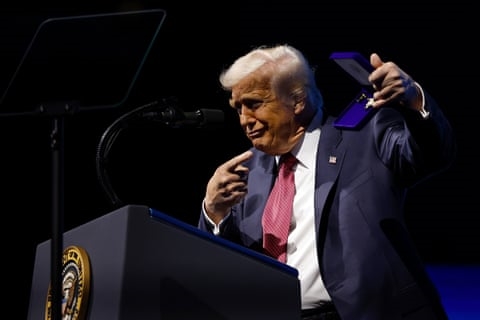
As the nation grapples with a prolonged government shutdown and significant cuts to federal food assistance, a stark contrast unfolded in Miami this week. The city played host to a high-profile business conference, where the President delivered an address celebrating his administration’s economic record.
The event, which featured a roster of prominent speakers from finance, sports, and politics, drew a largely affluent and supportive audience. Tickets commanded prices nearing two thousand dollars, and attendees included international billionaires and well-known American business figures. In a gesture that critics called tone-deaf, organizers provided participants with gift cards for food, a move that stood in sharp relief to the recent reduction in nutritional aid for hundreds of thousands of local residents.
Advocacy groups pointed to the scene as emblematic of a growing disconnect. “There’s a massive gap between the experiences of everyday people and the political and business elite,” said one state coalition director. “While families are figuring out how to afford groceries, this conference seemed to celebrate excess and insulation from those realities.”
The President’s speech struck a familiar campaign tone, targeting political opponents and touting economic achievements. The forum’s lineup, heavily weighted with his supporters and allies, fueled perceptions of a politically curated event. It also spotlighted Miami’s ambitions as a global hub, with discussions centering on major upcoming investments and international events slated for the region.
Local officials defended the forum’s composition, stating the intent was to gather leading voices from diverse sectors. “We want people to be inspired, to think ‘I can be on that stage,'” said one organizer.
However, for many residents, immediate concerns lie elsewhere. With housing and living costs rising sharply, community advocates have called for state action to address the food aid crisis, requests that have so far gone unheeded by the governor’s office. “The fundamental job is to look after the people,” argued one critic, highlighting the irony of a billionaire-studded conference occurring in a county where a quarter of households depend on the very assistance now being cut.
Throughout the proceedings, the President placed blame for the shutdown and its consequences squarely on the opposition party, reiterating his signature theme of national renewal. The event ultimately served as a vivid tableau of the current political and economic climate, where narratives of prosperity and crisis exist side-by-side, often in glaring contradiction.