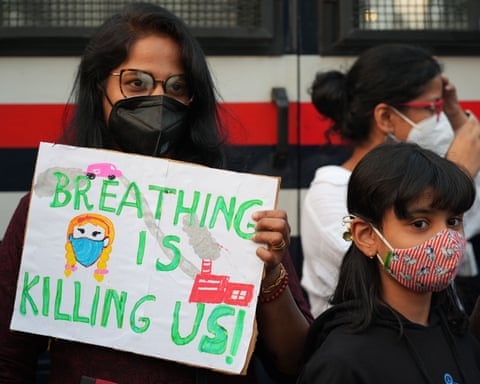
A thick, hazardous haze has once again settled over Delhi, but this time, it has been met not with resignation but with rare public defiance. Over the weekend, hundreds of citizens gathered in the capital to demand urgent action against the city’s chronic and deadly air pollution, only to face a forceful police response.
The protest, which organizers had planned for the symbolic India Gate, was effectively preempted by authorities. In the days leading up to the event, police conducted widespread intimidation, making hundreds of calls and home visits to discourage participation. On the day, the area was sealed off, and officers detained nearly 100 demonstrators, including elderly individuals and families with children, holding them at local stations for hours.
“For years, we have accepted this as our fate, but silence is no longer an option,” said one protester, a young professional recently diagnosed with a respiratory condition linked to air quality. “We came to peacefully demand our right to breathe, and we were met with suppression instead of solutions.”
Delhi’s air pollution crisis is an annual environmental catastrophe. For months each winter, a combination of vehicle emissions, industrial discharges, agricultural burning in neighboring states, and seasonal weather patterns creates a toxic smog that blankets the region. Air Quality Index (AQI) readings frequently exceed 500, a level considered “hazardous” and over ten times the threshold deemed safe by global health authorities. Medical studies consistently rank air pollution as a leading cause of illness and premature death in the city.
Despite the severe public health emergency, concrete and effective policy measures from state and national governments remain elusive. Critics accuse authorities of focusing on superficial measures or even manipulating pollution data rather than addressing root causes. A recent, costly government experiment to artificially induce rain and clear the smog was widely reported as a failure.
The frustration is palpable among residents. Those with means increasingly rely on expensive air purifiers or seek temporary refuge outside the city, turning clean air into a luxury commodity inaccessible to most of Delhi’s 30 million inhabitants.
“The monuments of our government are shrouded in this same poison that is choking our children,” remarked an older demonstrator, gesturing toward government buildings barely visible through the brown haze. “How many warnings do we need? This isn’t just dirty air; it’s a public health crisis unfolding in slow motion.”
The weekend’s events underscore a growing tension between citizen-led demands for environmental justice and the state’s handling of dissent. As the smog persists, so too does the resolve of a population increasingly unwilling to accept inaction as the cost of living in its own capital.