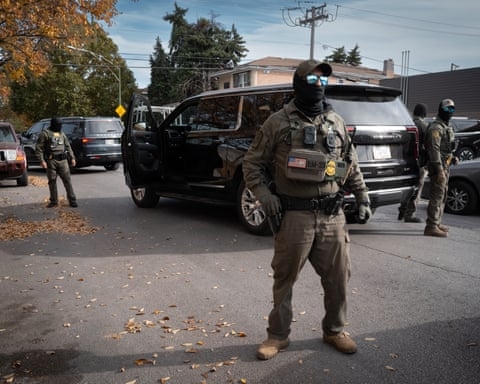
Federal data submitted to a court this week shows that the overwhelming majority of individuals detained in a recent, high-profile immigration enforcement operation in Chicago had no criminal convictions. The information appears to contradict official characterizations of such sweeps as primarily targeting dangerous criminals.
According to records filed by the Department of Homeland Security in an ongoing lawsuit, more than 97% of the 614 people arrested during the operation, which began in September, had no criminal conviction. Only 16 detainees were listed as having significant criminal histories. Among those, charges or convictions included assault, domestic violence, and, in one instance, offenses related to kidnapping and enticement of a minor. The remaining individuals had neither convictions nor pending criminal charges.
While federal authorities classified several dozen of those arrested as presenting a “high” risk to public safety, the data indicates the vast majority were assessed as “low” risks. Most, however, were labeled as potential flight risks.
The information was provided as part of a legal challenge accusing immigration authorities of violating a court order that restricts warrantless arrests. A legal group involved in the case noted that DHS submitted an additional document describing 39 detainees as security threats but provided no specific justification for that classification.
This pattern marks a significant shift in enforcement priorities. Prior to the current administration, individuals with no criminal record or pending charges represented a small minority of those in immigration custody. Recent analyses indicate that group has now become the largest single category of detainees nationwide.
In response to inquiries about the Chicago data, a DHS spokesperson called the figures “horrendously misleading,” stating that nationally, a majority of those arrested by immigration authorities have criminal convictions or pending charges. However, that national percentage has declined substantially since the start of the year, while the proportion of detainees without criminal records has risen sharply.
The Chicago operation’s results echo findings from similar enforcement actions in other regions earlier this year, where data also showed most individuals arrested lacked serious criminal histories, despite public statements framing the operations as targeting the “worst of the worst” criminal offenders.