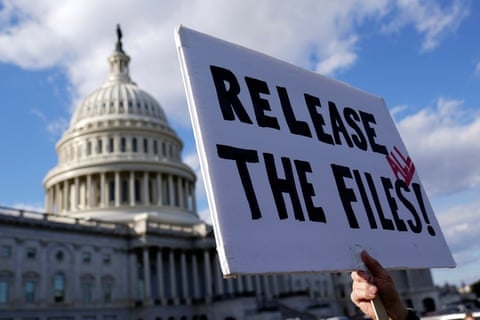
In a decisive move, the U.S. Congress has passed legislation compelling the full disclosure of government records concerning the late financier Jeffrey Epstein. The bill, which secured overwhelming bipartisan support, now advances to the President’s desk for final approval.
The House of Representatives voted 427-1 on Tuesday to approve the Epstein Files Transparency Act. The measure mandates the Department of Justice to release all unclassified materials related to Epstein, who died in a federal jail in 2019 while facing sex-trafficking charges. Following the House action, the Senate utilized an expedited procedure to unanimously clear the bill, sending it to the White House.
The legislative push gained unstoppable momentum in recent days after the President, who had previously opposed the release, reversed course and publicly called for transparency. This shift followed unsuccessful efforts to dissuade key members of his own party from supporting a procedural maneuver to force a House vote.
The near-unanimous congressional support effectively neutralized earlier resistance. Only one representative voted against the measure. In the Senate, procedural objections were withdrawn in the face of the overwhelming House vote, allowing for swift passage.
“The American people have waited long enough. Jeffrey Epstein’s victims have waited long enough,” a senior Senate leader stated during the floor debate. “Let the truth come out. Let transparency reign.”
While the President has pledged to sign the bill, he retains the authority to issue a veto. However, the margins of victory in both chambers are sufficient to override such an action. Should the bill become law, it would require the Justice Department to make public a trove of documents, potentially shedding new light on Epstein’s network and activities.
The push for disclosure occurs amidst a complex backdrop. Last week, the Justice Department was directed to open an investigation into several high-profile individuals named in a recent batch of Epstein-related emails released by a House committee. Legal observers note that such an investigation could provide a basis for the department to argue for withholding certain documents on the grounds they could prejudice an ongoing probe.
Ultimately, the legislation transfers the formal responsibility for disclosure from the executive branch to Congress. The final step rests with the President, who must decide whether to enact the law or challenge the will of a nearly united Congress.