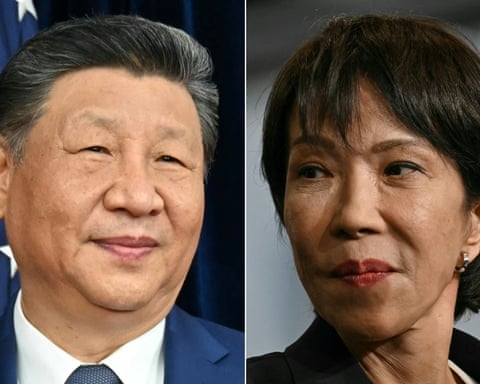
China has issued a formal warning to its citizens, advising against travel to Japan. The move comes as bilateral relations have deteriorated sharply following recent statements by Japan’s leadership concerning Taiwan.
The diplomatic friction intensified after Japan’s Prime Minister, Sanae Takaichi, addressed the country’s parliament earlier this month. She stated that a potential use of force against Taiwan could, under certain conditions, justify a military response from Japan. While Tokyo has since clarified that its fundamental policy regarding Taiwan remains unchanged, the remarks have drawn a strong reaction from Beijing.
In an official online statement, China’s embassy in Japan cited “blatantly provocative remarks” by Japanese officials, which it said had severely damaged the atmosphere for normal exchanges between the two nations. The advisory warned of “significant risks” to the safety of Chinese citizens currently in Japan and urged travelers to avoid the country for the time being.
The dispute has led to reciprocal diplomatic summonses. Beijing called in Japan’s ambassador to protest the prime minister’s comments, while Tokyo summoned China’s ambassador over what it deemed an “inappropriate” social media post from a Chinese diplomat in Osaka. That post, which has since been deleted, used inflammatory language apparently directed at the Japanese leader. Japan’s ruling party has subsequently passed a resolution calling for the diplomat to be expelled.
China maintains that Taiwan is an inalienable part of its territory and has consistently reserved the right to use all necessary means to uphold that claim. The relationship between China and Japan, while economically significant, is frequently strained by historical grievances and strategic disagreements, including over regional security.
Prime Minister Takaichi, known for her conservative stance on defense, has moderated her tone since taking office. However, her specific assertion that an attack on Taiwan could trigger Japan’s right to “collective self-defence”—a legal concept expanded in 2015 to allow military action if Japan’s survival is threatened—has become a focal point of the current rift. She has stated she does not intend to retract her comments but will avoid discussing specific hypothetical scenarios going forward.
The situation highlights a shift in rhetoric. Previous Japanese administrations have generally avoided explicit commentary on Taiwan’s defense, adhering to a policy of strategic ambiguity—a stance long mirrored by the United States regarding its potential response to a crisis in the Taiwan Strait. The current explicit remarks from Tokyo represent a notable departure from that tradition, contributing to the heightened tensions with Beijing.