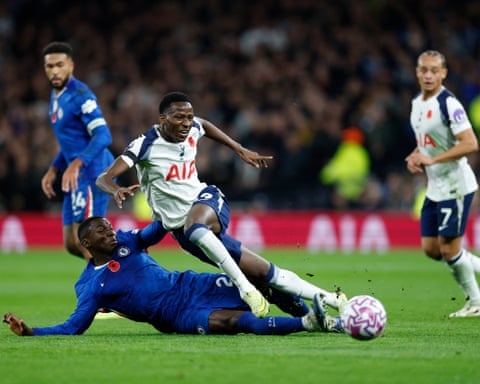
A match that promised a clash of London titans instead unfolded as a study in stark contrasts. At the final whistle, Chelsea departed with a narrow but decisive 1-0 victory, a result that felt less like a triumph of flair and more like a testament to rugged efficiency. For Tottenham Hotspur, the performance raised profound questions about their direction and cohesion.
The decisive moment arrived not from intricate artistry, but from relentless pressure. A misplaced pass in a dangerous area was all the invitation Chelsea’s midfield enforcer required. Surging onto the loose ball with a blend of power and tenacity, he disrupted Tottenham’s attempt to play out, creating the chaos from which the game’s only goal was ruthlessly converted. This player was the embodiment of Chelsea’s approach: physically dominant, unyielding in the challenge, and the clear standout performer on the pitch.
In contrast, Tottenham’s display was fragmented and uncertain. There was a persistent lack of attacking thrust, with moves often stalling or recycling backwards. Even set-pieces, typically a reliable source of opportunity, appeared disorganised. The team resembled a project still under construction, lacking the clear identity and synchronisation required at the highest level.
The match itself was a disjointed affair, punctuated by stoppages and moments of oddity—from a concerning early head injury to bizarre objects finding their way onto the playing surface. It was a contest that never settled into a compelling rhythm, more a series of forceful engagements than a flowing spectacle.
For Chelsea, the three points solidify their position in the upper reaches of the table, earned through a display of strong collective spirit. The win in this keenly-felt derby will be particularly satisfying.
The greater narrative, however, concerns Tottenham. Occupying a lofty league position before kick-off, this performance suggested it may be an illusion. The challenge for the manager is formidable: to forge a coherent and effective style from a squad that appears imbalanced, all while navigating a relentless schedule. The fundamental question lingers: what is this team’s defining principle? On this evidence, the answer remains unclear.
Ultimately, the encounter highlighted a recurring theme in the modern game: the disparity between extravagant investment and on-pitch clarity. It pitted one of the division’s most expensively assembled squads against a club boasting a magnificent stadium. Yet, for long periods, the football failed to match the grandeur of its surroundings, serving instead as a reminder that wealth alone cannot buy coherence or purpose.