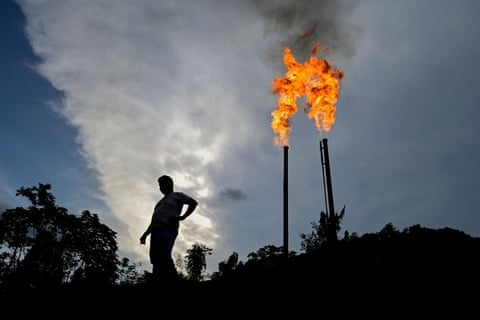
A new global analysis has revealed the staggering scale of human exposure to fossil fuel infrastructure, with approximately two billion people—a quarter of the world’s population—residing within five kilometers of active oil, gas, and coal sites. The research highlights a profound and widespread public health crisis linked directly to the industry’s footprint.
The study, which mapped over 18,300 operational extraction and processing facilities across 170 nations, found that nearly half a billion individuals, including 124 million children, live within one kilometer of these sites. Proximity to wells, pipelines, and plants is associated with elevated risks of severe health outcomes, including cancer, respiratory and cardiovascular diseases, adverse birth outcomes, and premature mortality. These operations also critically degrade local air and water quality.
Alarmingly, the infrastructure expansion continues. Roughly 3,500 new projects are currently planned or under development, threatening to expose an additional 135 million people to pollution, gas flaring, and potential spills.
The report identifies widespread “sacrifice zones,” where marginalized and low-income communities bear a disproportionate burden of contamination. The data indicates a pattern of environmental injustice, with Indigenous Peoples, who make up five percent of the global population, being exceptionally impacted. One in six fossil fuel sites is located on Indigenous territories.
The findings emerge amid heightened international scrutiny of the sector’s role in driving both climate change and human rights violations. The analysis underscores that the lifecycle of fossil fuels—from extraction to transport—not only fuels planetary warming but also inflicts immediate, devastating harm on nearby populations and critical ecosystems. A third of all operational sites overlap with biodiverse areas essential for carbon sequestration, such as wetlands and forests, risking irreversible ecological damage.
Community testimonies from multiple continents describe a relentless toll, including loss of livelihoods, cultural erosion, and targeted legal and physical threats against those opposing projects. “We physically won’t survive this,” said one Indigenous land defender, referencing the constant pressure from industrial expansion on ancestral lands.
Calls are intensifying for a rapid, equitable global transition away from fossil fuels, centered on public health and justice. Experts stress that ending new projects and phasing out existing infrastructure is not only a climate imperative but a urgent necessity to safeguard the health of billions.