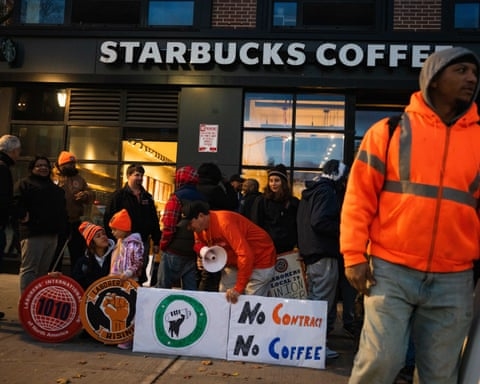
Hundreds of workers and supporters gathered outside a busy coffee shop in Brooklyn on a cold November morning, their chants echoing down the block. The scene was part of a coordinated nationwide work stoppage involving employees at dozens of locations, who walked off the job to demand better wages and working conditions.
The timing of the action was strategic, coinciding with a major annual promotional event known for driving significant customer traffic and sales. Organizers stated the goal was to leverage this high-revenue day to apply pressure on corporate leadership, following prolonged and unproductive negotiations over a first labor contract.
At the Brooklyn location, the impact was visible. The typically crowded store saw a sharp drop in patrons, with many choosing to honor the picket line. A shift supervisor and rally organizer at the store reported that a significant number of potential customers were persuaded to support the strike. Inside, operations were reportedly maintained by managerial staff brought in from other areas.
The walkout drew support beyond current employees. A former barista, now working for a unionized delivery company, attended to show solidarity, citing firsthand experience with low pay and the transformative difference a union contract made in his own earnings and benefits. Other supporters included members from various labor organizations and local residents, who noted the unusual quiet at the normally bustling café.
Elected officials and national labor leaders also joined the demonstrations. Speeches highlighted the broader significance of the fight, connecting the baristas’ struggle for fair compensation to wider social justice issues and the fundamental right to dignified work.
The union representing the workers announced last week that members had voted to authorize an indefinite strike over alleged unfair labor practices. They have spent months pushing for proposals to address understaffing and improve pay, against a backdrop of hundreds of formal complaints filed during the organizing drive. While corporate management has expressed disappointment at the decision to strike, asserting most locations would operate normally, the union’s growth has been substantial, with hundreds of stores voting to unionize in recent years despite opposition.
In Brooklyn, the message from the picket line was clear. For the workers, the markedly slower business on what is usually one of the year’s busiest days was not an inconvenience, but a measure of success and a powerful show of collective strength.